




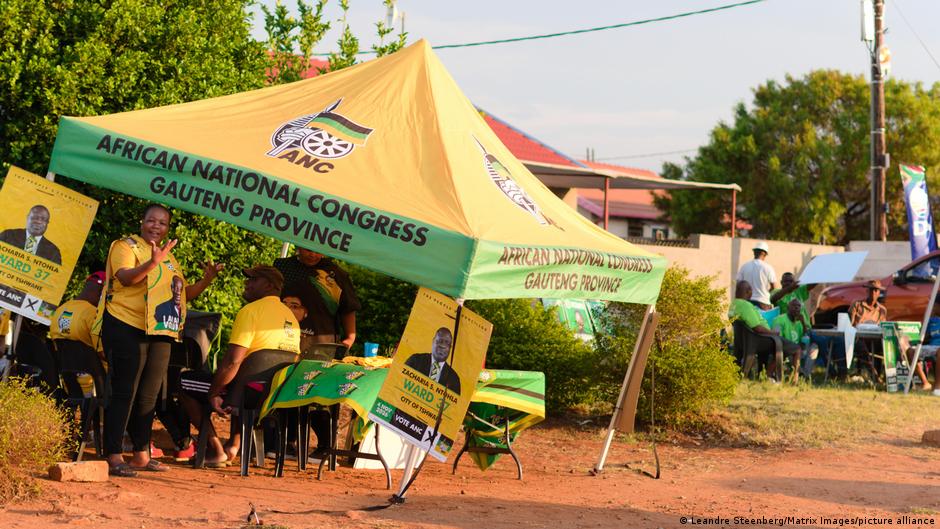
In a significant shift in South Africa’s political landscape, the African National Congress (ANC) recorded its worst-ever election performance during the recent municipal polls, securing less than 31% of the vote, as reported by the country’s Electoral Commission on Sunday. This disappointing result marks a notable decline for the ruling party, which has struggled with increasing voter dissatisfaction.
The opposition Democratic Alliance (DA) garnered nearly 25% of the votes, demonstrating its rising influence. In addition to its poor overall showing, the ANC lost its majority in six of the eight major metropolitan areas. Several of these cities, including economic hubs, will likely require coalition talks to form new municipal governments.
Leadership Responses and Public Dissatisfaction
Despite remaining the most popular party in the country, the ANC faces growing backlash over various issues, including persistent water and electricity shortages, high unemployment, rampant crime, and allegations of corruption. ANC Secretary-General Fikile Mbalula described the election outcome as “catastrophic,” emphasizing the need for the party to regain public trust. “We cannot ask the people to trust us merely because of our history,” he stated.
South African President Cyril Ramaphosa acknowledged the implications of municipal failures, noting in his weekly letter that these issues have contributed to declining public confidence in democratic governance. He has yet to formally address his party’s performance directly following the elections.
Political analysts view the ANC’s results as a critical indicator of shifting voter sentiment, with expectations that they may influence the upcoming general elections in 2029. “This is the most severe result that the ANC would have feared,” said analyst Daniel Silke, highlighting the party’s continuous decline over recent years. The ANC previously lost its outright parliamentary majority for the first time in the democratic era during the 2024 elections.
Smaller parties have gained traction, further fragmenting the political landscape and eroding support for the ANC, which dominated South African politics since the end of apartheid in 1994.
In contrast, the DA’s performance positions it well, as the party is expected to maintain control of Cape Town and may also secure coalitions in other key cities like Pretoria and Johannesburg. DA leader Geordin Hill-Lewis expressed confidence in building effective governance coalitions, stating, “It is time now… to put together governments that can actually fix these towns and cities.” The party has begun outreach to other political groups to facilitate these coalitions.
The outcome of these elections and the subsequent coalition negotiations will have significant implications for local governance in South Africa, as political leaders look to address the critical issues facing constituents.
