




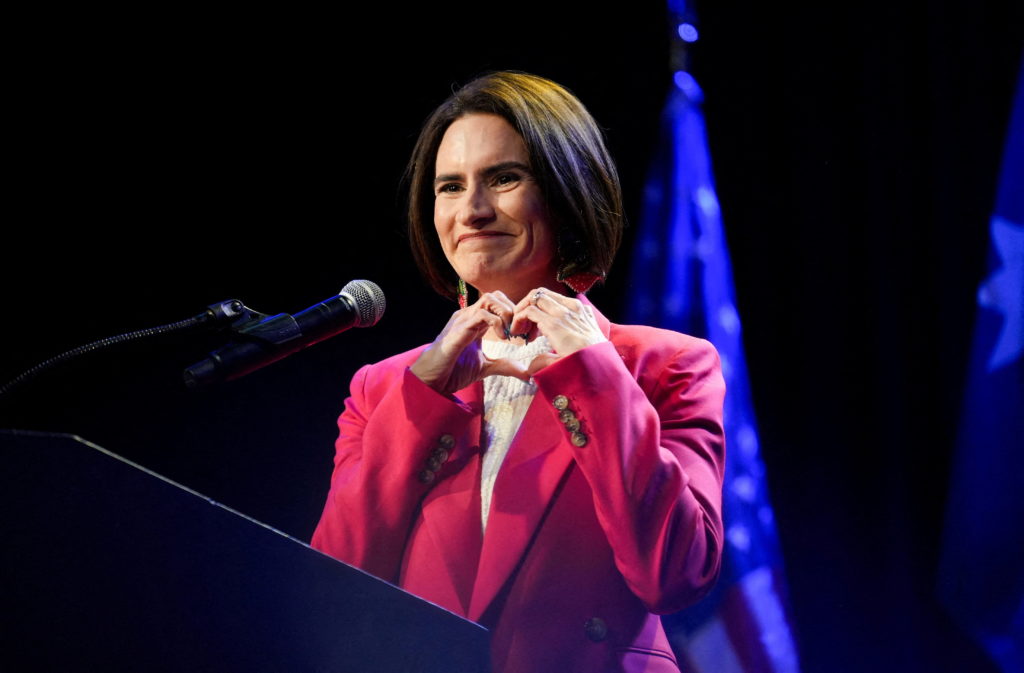
ALBUQUERQUE, N.M. — Crystalyne Curley made history on Election Day by becoming the first woman elected president of the Navajo Nation, a milestone she dreamed of since childhood. Curley, inspired by a field trip to the Navajo Nation Council during her third-grade year, shared her vision for leadership at a young age. “I thought to myself at a very young age, that’s where I want to be,” she recalled.
Curley’s victory is part of a significant wave of historic political achievements this election cycle, which includes the election of the nation’s first Black female governor and the first openly gay man and first Muslim elected to the U.S. Senate. Native American women, in particular, have begun breaking through barriers long imposed in formal political roles despite their influential presence in families and communities.
Peggy Flanagan became the first Native American woman elected to the Senate, while Deb Haaland took office as the first woman to serve as governor in the state of New Mexico. “This is a win for all Navajo women,” Curley said after her victory.
Jordan James Harvill, a citizen of the Cherokee Nation and a strategist with the advocacy group Advance Native Political Leadership, remarked on the transformative changes occurring in Native communities: “Decades of political organizing are bearing fruit as more Native women run for and win office. This is a seismic shift that is happening in our communities.”
In the Navajo Nation election, local supporters like Lene Bitsui expressed their backing for Curley, citing her potential to restore order within the tribal government amidst perceived dysfunction. Despite initial doubts about the community’s readiness for a female leader, Bitsui expressed her joy in being proven wrong.
The Navajo Nation, which spans 27,000 square miles across Arizona, New Mexico, and Utah, has been governed by men since its establishment, with some within the community citing traditional beliefs that have historically excluded women from these top positions. Conversely, others argue that the absence of female leadership contradicts the matrilineal structure of Diné society.
Throughout her campaign, Curley encountered sexist rhetoric and anticipates that she will face heightened scrutiny compared to her male predecessors. “As women, we have to work twice or triple as hard, especially within Navajo politics,” she noted. Curley previously served as the first female speaker of the tribe’s legislative council.
Curley, along with her running mate Chris Deschene, plans to take office in January, prioritizing a transition away from coal development, which has historically served as an economic pillar for the tribe, and aims to elevate the Navajo Nation’s role in federal Indian policy discussions.
In parallel developments, the Seneca Nation of Indians elected Tina Abrams, a long-time council member, as its first woman president on the same ballot.
As the historic elections settle, the momentum for increased representation among Native women appears to continue growing in Congress. Flanagan acknowledged the support of Native women during her Senate victory celebration, emphasizing her reliance on their contributions. With these changing dynamics, political leaders like Curley and Haaland are poised to reshape leadership in their communities and beyond.
