




SHENZHEN, Nov. 14 (Xinhua) — Shenzhen, known as a vibrant technology hub in southern China, is playing a pivotal role in advancing economic collaboration across the Asia-Pacific region. This week, the city will host the 33rd APEC Economic Leaders’ Meeting under the theme “Building an Asia-Pacific Community to Prosper Together,” highlighting its commitment to innovation and multilateral cooperation.
Shenzhen’s impact on regional trade is substantial. According to the General Administration of Customs, China’s goods trade with APEC members reached 26.29 trillion yuan (approximately 3.9 trillion U.S. dollars) in 2025, accounting for nearly 60 percent of its total foreign trade. Exports of high-tech products to APEC countries increased by 8.1 percent, totaling 4.63 trillion yuan.
The city has recorded significant growth in research and development (R&D), with spending increasing at an average annual rate of 12.9 percent from 2020 to 2024. R&D intensity in Shenzhen stands at 6.67 percent, the highest among Chinese cities, and the Shenzhen-Hong Kong-Guangzhou innovation cluster has topped the Global Innovation Index rankings.
Chen Jiaxi, vice president of the Shenzhen Reform and Opening Up Executive Leadership Academy, noted that cooperation between Shenzhen and its Asia-Pacific partners encompasses manufacturing, research, talent development, and technological application. Chen emphasized that the leaders’ meeting will signal China’s ongoing commitment to high-standard opening up and sharing opportunities with the region.
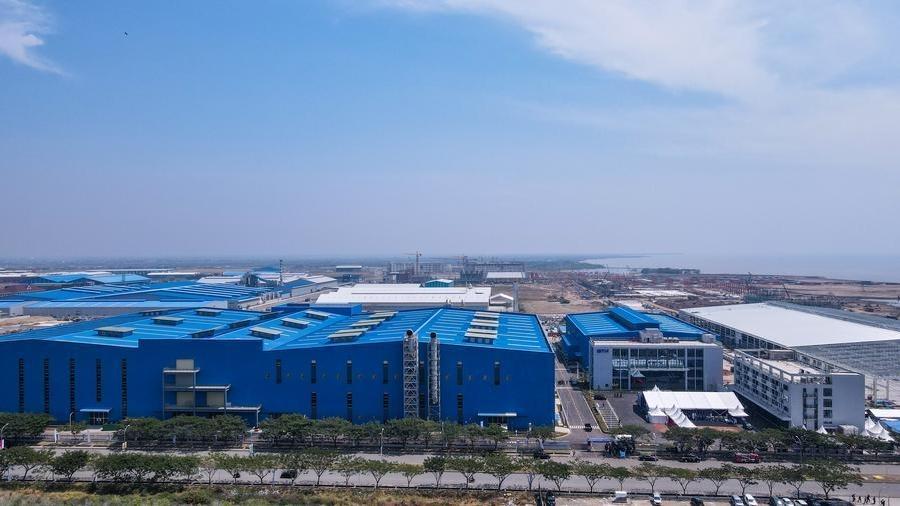
Shenzhen-based companies have expanded their operations significantly in Asia-Pacific. For instance, BTR New Material Group recently opened the first overseas anode material plant in Indonesia, allowing the country to establish its lithium-ion battery anode production capabilities. The plant, inaugurated in August 2024, has seen a revenue surge of 161 percent in the first half of 2026, generating 1.71 billion yuan.
Another Shenzhen firm, SED Industry Co., Ltd., has innovatively approached overseas plant construction in Thailand by integrating local climate considerations into their designs. By employing advanced digital technology, SED reduced construction clashes by over 95 percent and completed a plant within 270 days.
Shenzhen’s influence extends into education and research. The BGI Group has partnered with more than 80 universities in the region to provide training programs for nearly 4,500 students, focusing on life sciences and genomics. Their collaboration with Indonesian authorities aims to bolster the country’s national genome program.
Technological advances developed in Shenzhen also aim to enhance local healthcare services. A Shenzhen-developed surgical robot has been used in Malaysia for various procedures since its introduction. This flexible platform accommodates multiple implant brands, allowing local surgeons to maintain familiarity while leveraging advanced technology.
In Thailand, Mahidol University has installed a large solar panel system, described as the largest of its kind in the Asia-Pacific. The project aligns with national efforts to achieve carbon neutrality by 2050 and is expected to save about 2.3 million U.S. dollars annually, significantly reducing carbon emissions.
Overall, these developments illustrate Shenzhen’s role as a model for cooperation and growth in the Asia-Pacific, as outlined by Chen, who noted that openness fosters innovation and collective prosperity in the region.
