




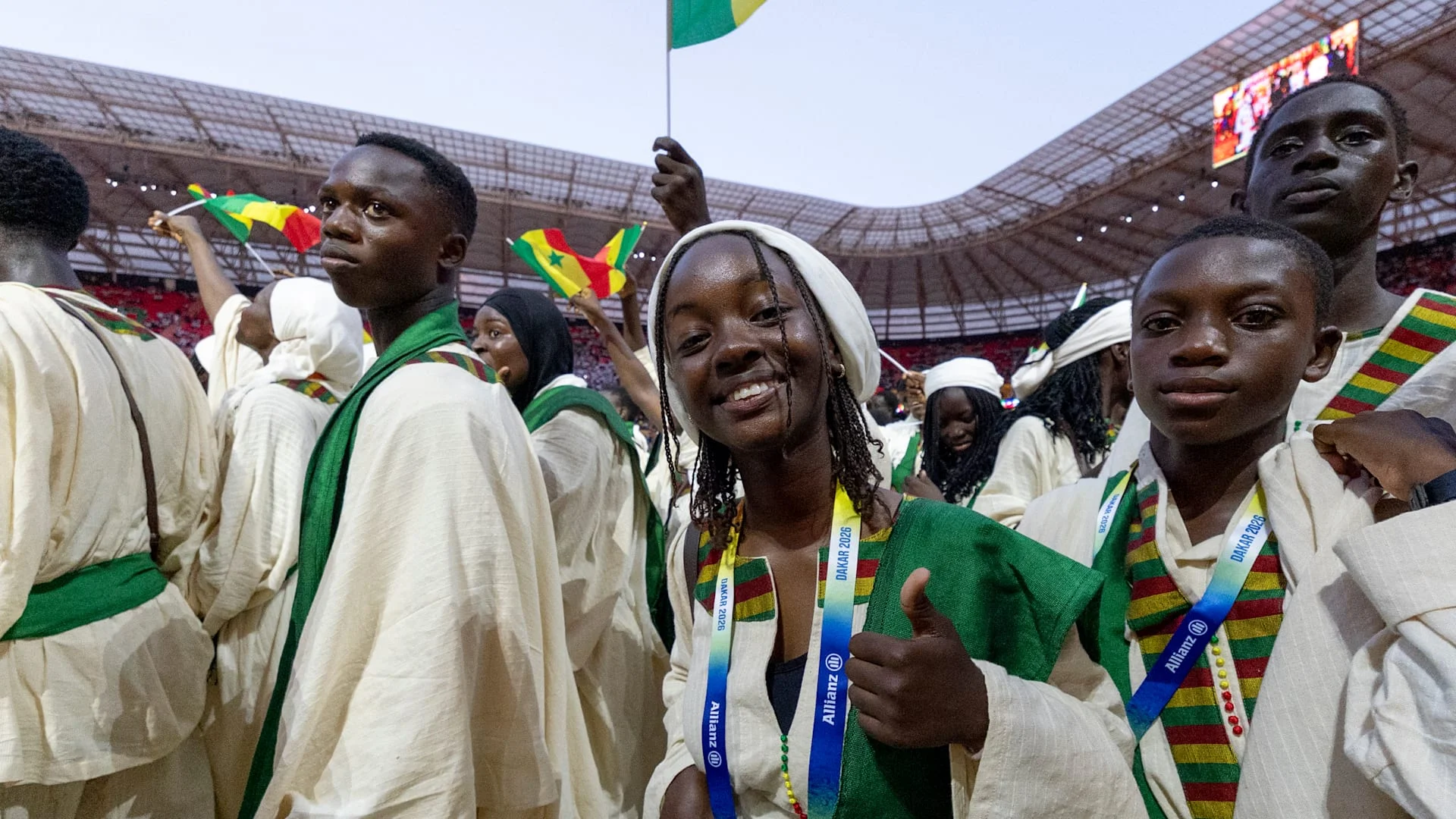
The inaugural Olympic event on African soil commenced on Saturday evening in Diamniadio, located approximately 30 kilometers from Dakar. Over the next two weeks, from October 28 to November 13, 2,655 athletes aged 14 to 17 from 205 delegations will compete in 153 medal events across 25 sports in Dakar, Diamniadio, and Saly. The competition had already kicked off with baseball5 on Friday, followed by beach volleyball, table tennis, and coastal rowing on Saturday morning.
A Show Reflecting Senegalese Culture
The opening ceremony, titled “The Flight of Sitoé,” showcased Africa’s narrative through three central characters: Alkebulan, symbolizing Africa’s past; Keb, representing the present; and Sitoé, a young girl embodying the continent’s future. Social media influencer Khaby Lame, an ambassador for the Games, presented a canvas created live by Senegalese artist Boubou Design.
Senegalese wrestling featured prominently, with around 100 wrestlers performing the bakk, a ritual dance preceding matches. Notable participants included Modou Lo, Eumeu Sene, Sa Thies, and Franc. Additional performances included traditional dances and theatrical presentations of Simb, the “false lion.” The musical lineup contained artists such as Kiné Lam, Baaba Maal, Daara J Family, Dip Doundou Guiss, and Souleymane Faye. Kya Loum performed the national anthem.
According to the organizing committee, a total of 1,115 individuals were involved in the ceremony, with 628 dancers donning nearly 1,500 costumes made locally in Senegal.
Parade of Nations
In the traditional parade of nations, Greece led the procession, followed by the Refugee Olympic Team, participating in the Youth Olympics for the first time, and comprised of six athletes. Lourance Numukiza, 16, and Rachid Rochene, 17, were the team’s representatives. Senegal closed the parade, represented by flag bearers Ndeye Khady Anna Diatta, a beach wrestler, and taekwondo fighter Ibrahima Beye, both 17 years old. Diatta had previously delivered a message from the athletes to President Bassirou Diomaye Faye during a flag ceremony at the presidential palace.
Speeches Celebrating Youth and Hospitality
Mamadou Diagna Ndiaye, president of the organizing committee, addressed athletes in both French and Wolof, emphasizing values such as dignity, respect, and personal growth through competition. “Here, your opponent is not an enemy. He is the one who helps you become better,” he stated, according to Olympics.com. Kirsty Coventry, president of the International Olympic Committee, expressed pride in the significance of the event for Africa, noting, “I am proud to be an African woman. And I am so proud that our continent is hosting the Olympic Movement for the very first time.” She commended the young Senegalese involved in the Games for their spirit of “teranga,” the Wolof term for hospitality.
The Flame’s Journey
The Olympic flame, which was lit in Athens on September 10, made its way through all 14 regions of Senegal before arriving at the stadium. Among the final torchbearers were Amadou Dia Ba, Senegal’s only Olympic medalist, as well as Saly Sarr, Yves Bourhis, fencer Abdourahmane Marieme Sy, and judoka Aicha Diop, as reported by Olympics.com. The identity of the individual who lit the cauldron was not disclosed in reports from the ceremony.
According to the International Olympic Committee, the flame will remain lit until November 13 on the Corniche Ouest, the festival site and road cycling venue.
Upcoming Events
Competition will intensify on Sunday, October 29, with ten sports including judo, swimming, rugby sevens, and futsal. The first medals of the Games will be awarded at 3 PM GMT at the Tour de l’Oeuf complex, featuring the 200m backstroke finals in swimming, followed by the judo podium presentations at the Dakar Expo Center.
