




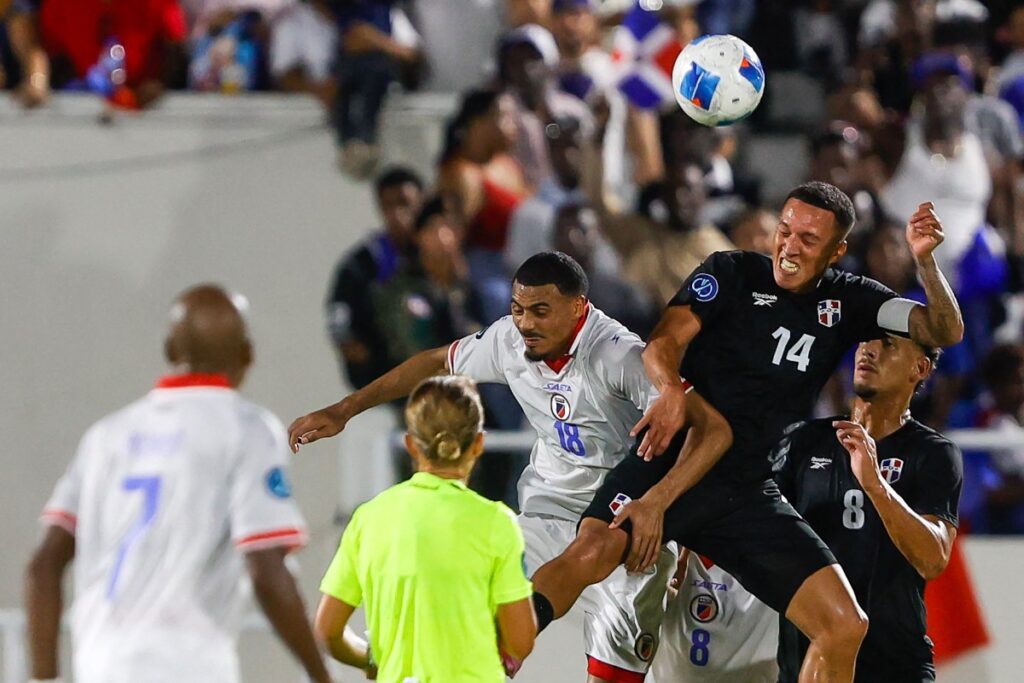
SANTO DOMINGO, Dominican Republic — The Dominican Republic has issued a ban on Haiti’s national football team from playing in its territory following an incident where Haitian fans attempted to force entry into a sold-out match. The match took place on October 1, 2026, at the Felix Sanchez Olympic Stadium and was part of the Concacaf Nations League, marking the first time the two teams faced off on Dominican soil since 2013.
Incident During the Match
The game ended with Haiti winning 4-1, but it was marred by chaos as fans tried to breach security at the stadium. Kelvin Cruz, the Dominican Sports Minister, labeled the situation as “unacceptable.” He announced the government’s decision to prohibit the Haiti national team from utilizing any sports venues within the Dominican Republic.
Post-match tensions escalated further when Wilson Isidor, a star striker for Haiti, celebrated his two goals by proclaiming, “Hispaniola is Haiti! This is Haiti!” These remarks were met with criticism from some Dominican officials, including Jose Deschamps, head of the Dominican Republic’s football federation, who stated that Isidor’s comments were “not appropriate” given the current relations between the two nations.
The backdrop to this incident is a fraught relationship between the Dominican Republic and Haiti, notably exacerbated by issues related to immigration and crime. Dominican President Luis Abinader has prioritized addressing Haitian immigration, highlighted by the construction of a wall along their shared border. Official statistics reveal that over 265,000 Haitians were expelled from the Dominican Republic in the first eight months of 2026.
Haiti faces significant challenges, including rampant gang violence and instability, with large areas of the country under the control of armed groups. The tensions between the two nations reflect complex historical and socio-political dynamics that continue to shape relations on the island of Hispaniola.
Why It Matters
The ban on Haiti’s football team underscores ongoing tensions between the Dominican Republic and Haiti, highlighting the intersection of sports, national identity, and diplomatic relations. As regional dynamics evolve, this incident may further complicate interactions between the two countries in various spheres, including sports, economics, and immigration policy.
