




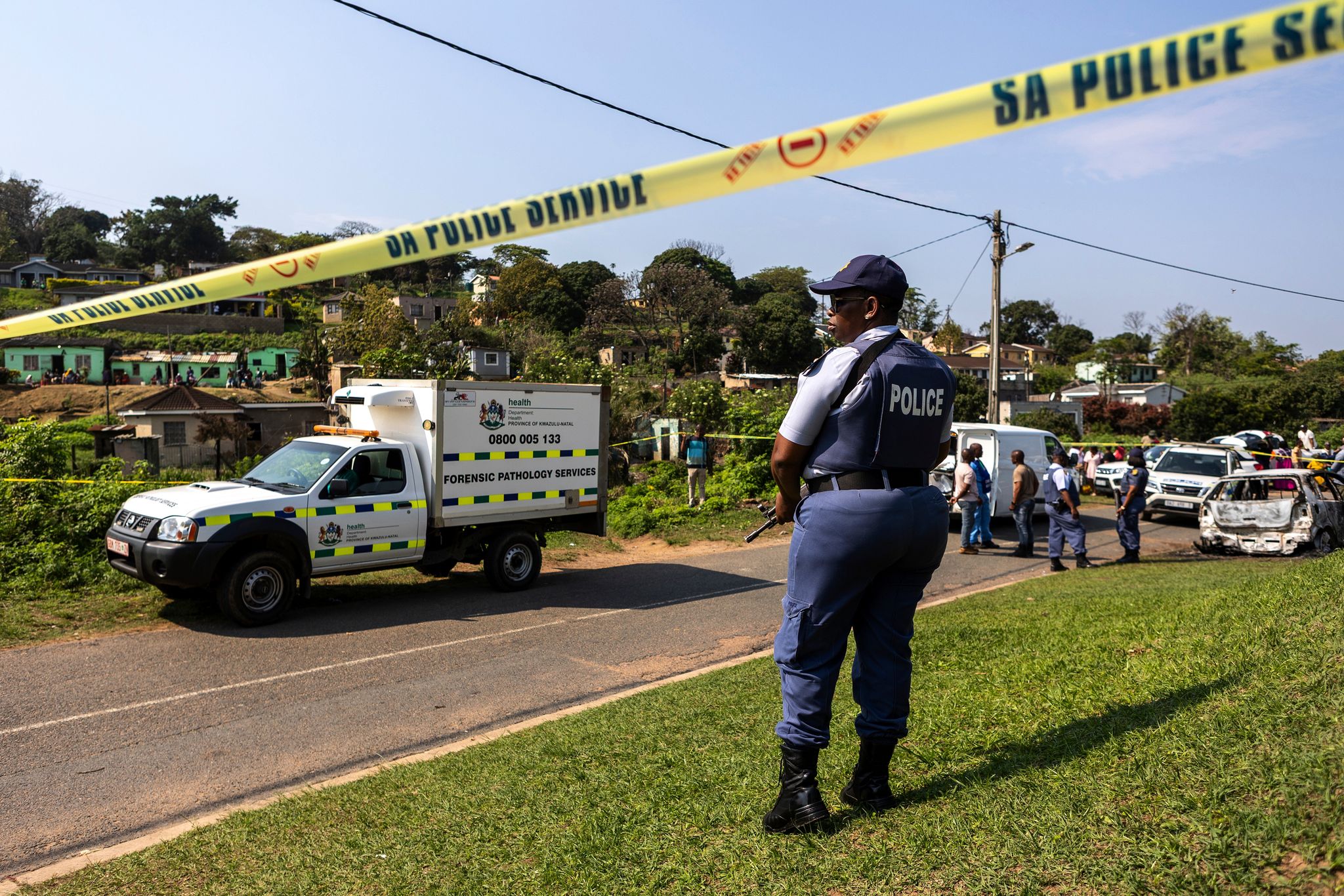
CAPE TOWN, South Africa — A series of mass shootings across South Africa has left at least 38 people dead and nearly 30 injured within a span of six days. The deadliest incident occurred on Saturday night when eight gunmen armed with AK-47 rifles and handguns attacked patrons outside a bar in Wedela township, killing 17 individuals before moving inside to continue their assault.
Overview of Recent Shootings
The recent string of mass shootings highlights a troubling trend in South Africa, where violence is frequently linked to criminal activities rather than ideological motives. Police investigations reveal that multiple gunmen were involved in each of the three mass shootings over the past week. The incidents have primarily taken place in impoverished neighborhoods near major cities, underscoring concerns over gang-related violence.
On the night of the Wedela shooting, further violence erupted just hours later in Lwandle township, resulting in 10 fatalities at a store associated with a nighttime entertainment venue. In KwaMakhutha township, near Durban, three gunmen also attacked a house party, killing 11 attendees. This pattern of coordinated attacks has raised alarm about the escalating violence in these communities.
Authorities report that many shootings are orchestrated by criminal gangs engaged in turf wars or efforts to assert control over particular areas. Local residents noted a history of violence connected to illegal mining gangs in regions like Johannesburg, along with other gangs involved in the drug trade in cities such as Cape Town.
Despite South Africa’s high gun homicide rate, the ongoing violence mainly affects marginalized communities, which often lack adequate police protection and resources. Poor township conditions, such as proximity to police stations and inadequate lighting, contribute to their vulnerability to violent crime, making innocent bystanders susceptible to these mass shootings.
In response to the rising violence, President Cyril Ramaphosa authorized the deployment of soldiers to assist police in combating organized crime. While some community members have welcomed military support as a necessary measure for safety, critics argue that such actions signify a failure of law enforcement to maintain order.
Why It Matters
The recent mass shootings reflect deeper social and economic issues in South Africa characterized by inequality and impunity among criminal groups. With communities grappling with violence and fear, the need for effective law enforcement and social interventions to restore safety and order has never been more pressing.
