




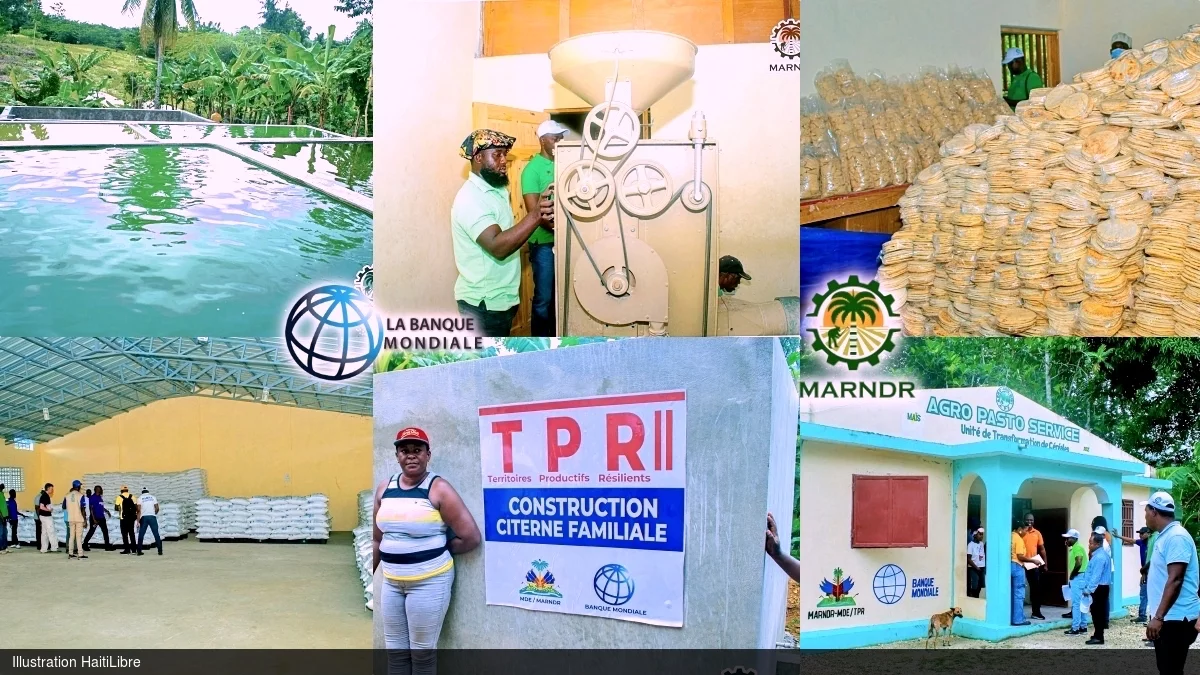
World Bank Delegation Evaluates Agricultural Projects in Haiti’s Nippes Department
A delegation from the World Bank, accompanied by officials from the Ministry of Agriculture and project teams, recently visited the Nippes department in Haiti to monitor agricultural projects funded by the bank. The visit focused on the Resilient Agriculture for Food Security Project (PARSA) and the Resilient Productive Territories Project (TPR II), covering locations from Fonds-des-Nègres to Anse-à-Veau.
The purpose of the mission was to assess the achievements of these projects, specifically in areas such as agri-food processing, storage and marketing of agricultural products, access to water, and fish farming. Delegates met with beneficiary organizations to discuss progress and identify challenges affecting the sustainability of these initiatives.
In Fonds-des-Nègres, the World Bank team highlighted improvements in local processing capabilities for cassava, rice, and corn. They toured facilities supported by TPR II, including one operated by the Farmers’ Group for Economic and Environmental Development. This facility processes cassava into various products, including cassava flatbreads and pastries. Leaders from the group noted they had processed approximately 60 tons of cassava in the past year, thanks in part to equipment supplied by TPR II.
The delegation next visited Agro-Pasto Service in Jovange, where rice and corn from local farms are processed. This facility has produced around 216 tons of white rice over the last twelve months, improving the value of local crops and enhancing production capacity for area farmers.
In Petite-Rivière-des-Nippes, the delegation examined an aggregation center established under the PARSA project that supports the supply chains for 39 school canteens. This facility enables effective collection, storage, and distribution of agricultural products, helping ensure a steady supply for local schools.
Additionally, the visit included an inspection of family cisterns constructed under the TPR II project, which aim to ease water access issues faced by local households. Residents shared their challenges, including travel distances and costs associated with water acquisition.
Another stop was a fish-farming facility in Abraham, supported by TPR II. This site features eleven ponds that promote aquaculture and diversify local economic activities. It helps increase the availability of fish products in nearby markets.
The delegation concluded their tour in Anse-à-Veau, where they evaluated various infrastructure projects aimed at enhancing agricultural productivity and building community resilience against climate change. Meetings with local farmers and project beneficiaries allowed them to discuss successes and ongoing challenges.
This mission underscored the collaborative nature of the PARSA and TPR II projects in strengthening agricultural value chains and supporting rural communities throughout the Greater South region of Haiti.
