




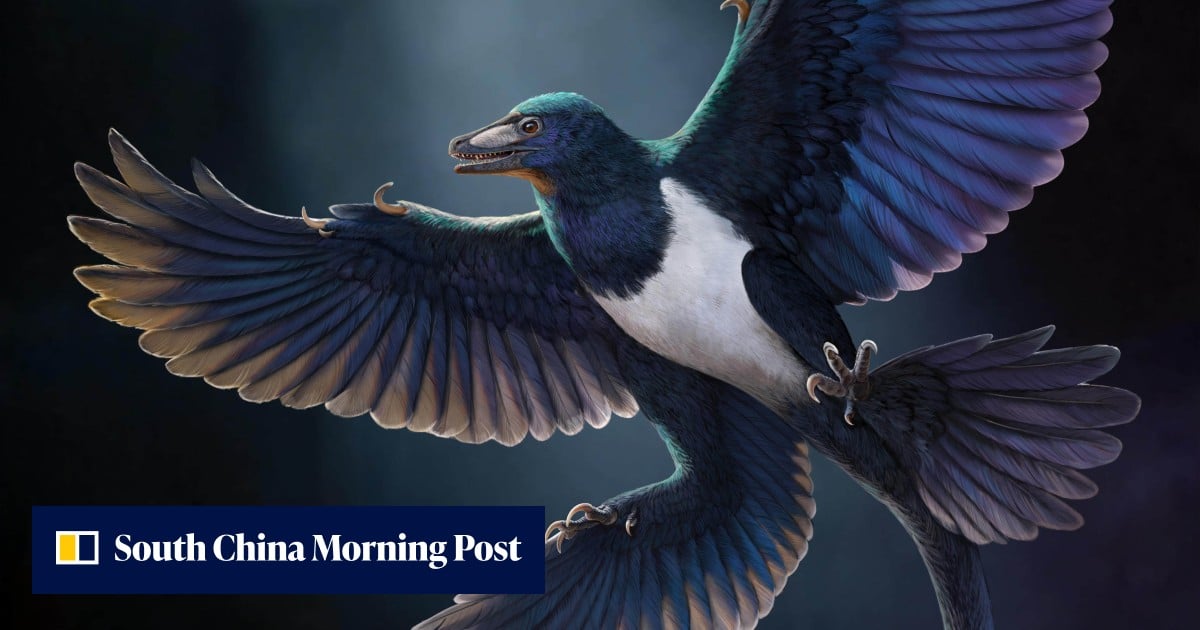
The newly identified species, named Norellraptor barsboldi, measures 57 cm (22 inches) in length and is categorized as a four-winged predatory dinosaur. This creature is part of the microraptorines, a group consisting of small feathered dinosaurs closely related to modern birds.
The findings suggest that rather than flight evolving from a single ancestral lineage, it occurred independently across various dinosaur lineages. The team of researchers, representing institutions in China, Italy, and Slovakia, published their results in the journal Nature Communications.
Implications of the Discovery
The discovery of Norellraptor barsboldi challenges previously established theories regarding the evolution of flight in dinosaurs. Researchers noted that “these results dismiss a shared developmental pattern driving the evolution of the flying dinosaurs and support multiple and independent selective regimes at the origin of the winged taxa in Paraves,” the clade that includes both birds and microraptorines.
This finding emphasizes the complexity of evolutionary processes in dinosaurs and raises questions about existing perceptions of how flight originated in these creatures. It heralds a potential shift in the approach to studying the evolutionary pathways that led to the emergence of powered flight.
Why It Matters: The discovery of Norellraptor barsboldi not only enriches the fossil record but also prompts a reevaluation of how flight evolved in non-avian dinosaurs, suggesting a more intricate evolutionary history than previously understood. This could lead to new explorations in paleontology and evolutionary biology.
