




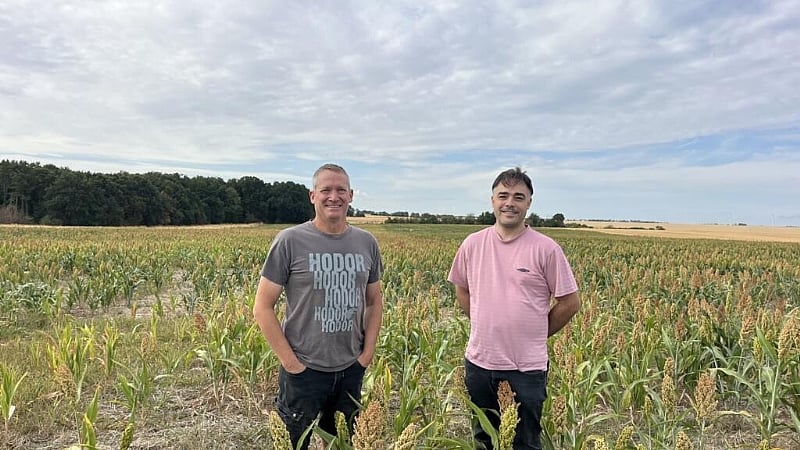
French cereal farmers are increasingly looking towards sorghum as a viable crop to combat the effects of climate change, particularly rising temperatures. Sorghum, classified as the world’s fifth most essential cereal crop, is traditionally cultivated in hot, arid regions of sub-Saharan Africa and parts of Asia. As of 2024, France has become the largest sorghum producer in Europe, with about 103,000 hectares planted, according to the Chamber of Agriculture.
The Rise of Sorghum in France
In Essonne, located south of Paris, farmers are experimenting with sorghum amidst large fields of wheat and rapeseed. Eudes Coutté, a local sorghum grower, noted that the crop resembles maize plants, reaching approximately 80 centimeters in height. Sorghum produces small green balls, which turn red as they mature, and harvesting occurs between September and November, depending on weather conditions.
Notably, sorghum thrives in temperatures ranging from 25°C to 35°C, characteristics that present opportunities for French farmers facing increased heat. Although France’s climate was previously considered unfavorable for sorghum, its cultivation has expanded steadily over the last 15 years. Coutté emphasized the need for adaptation, stating the urgency of making agricultural changes to sustain future farming practices.
Despite its advantages, sorghum is not a definitive solution. Coutté mentioned that some crops suffered from particularly dry summer months, resulting in noticeable yellowing and drying of the plants. However, he acknowledged sorghum’s superior drought resistance compared to maize, thanks to its extensive root system that can reach depths of two meters.
Farmers Ludovic Joiris, who has practiced soil conservation methods for nearly two decades, is collaborating with Coutté in this venture. While they are still navigating the cultivation process, Joiris remarked that the learning curve is ongoing, and they are continuously adapting their methods based on crop performance and environmental factors.
Challenges Ahead
Franck Laborde, president of the AGPM—a major agricultural union in France—highlighted the economic factors influencing sorghum adoption. He noted that increased production will only be feasible if consumer demand rises, which remains limited for both animal feed and human consumption. Currently, sorghum is not profitable enough to sustain the livelihoods of farmers solely relying on it, prompting Coutté and Joiris to engage in other supplementary food-related activities.
The experience of these farmers underscores a critical point: adapting crops to climate change is only part of the solution; a parallel effort is needed to ensure market demand for these new agricultural products.
Why It Matters
The exploration of sorghum cultivation in France highlights broader agricultural adaptations to climate change. With rising temperatures affecting traditional crops, the success of sorghum may influence future farming practices and food security across Europe.
