




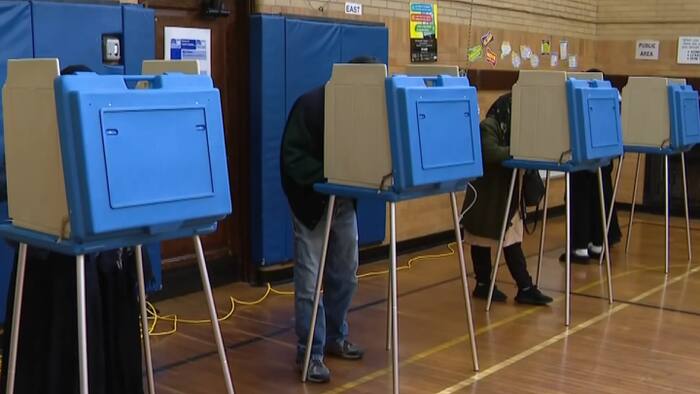
Michigan voters will decide in November on Proposal 2, a ballot initiative aimed at reforming the state’s campaign finance laws. If approved, the measure would prohibit utility companies and certain government contractors from contributing to state political candidates and increase disclosure requirements for political advertising.
This initiative, known as the Michiganders for Money Out of Politics (MMOP), seeks to reduce corporate influence in elections by banning contributions from companies that earn more than $250,000 annually from state or local government contracts. Additionally, it would require groups spending over $5,000 on political ads within 100 days of a general election or 30 days of a primary to disclose their expenditures. Online political ads would also fall under these disclosure requirements.
Supporters Advocate for Voter Rights
Supporters, including Christy McGillivray, co-chair of MMOP, argue that corporate donations drown out the voices of ordinary voters. McGillivray explained that many corporations use large political contributions to influence policy in their favor.
“The entities giving millions and millions of dollars to politicians often get exactly what they want in policy, and the result is that the voices of voters are drowned out,” she stated. McGillivray highlighted that the initiative aims to restrict the influence of not just utility companies but also health insurance firms and government contractors. She pointed out that current practices lead to “pay-to-play” politics.
Opponents Raise First Amendment Concerns
Opponents of Proposal 2, including a group called Protect MI Free Speech, argue that the measure would infringe on First Amendment rights and potentially stifle contributions from average citizens. Spokesperson John Sellek criticized the proposal as overly broad, suggesting it could limit support for various organizations tied to the affected companies.
“Proposal 2 must be a NO vote because it goes far beyond what its secret, dark-money funded creators are telling people,” Sellek said, warning that it threatens the ability of citizens to support their chosen candidates.
DTE Energy referred inquiries to Sellek, while Consumers Energy publicly opposed the proposal, asserting that it would not eliminate corporate influence but would redirect it toward out-of-state interests. Katie Carey, a representative from Consumers Energy, expressed concerns that the measure could disadvantage local businesses and nonprofits by empowering out-of-state donors.
McGillivray countered this argument by referencing a recent approval of a $139.2 million rate hike for Consumers Energy, questioning their motives and stating, “Who are voters going to trust more — the more than 560,000 Michiganders who signed the petition or Consumers Energy?”
Poll Results Indicate Strong Support
Local polling on Proposal 2 indicated substantial support among Michigan voters, with 71.5% in favor, 15.6% against, and 12.8% undecided. These results suggest a strong backing for the proposed changes as the election approaches.
The election for Proposal 2 will take place on November 8, where voters will have the opportunity to shape the future of campaign finance in Michigan.
