




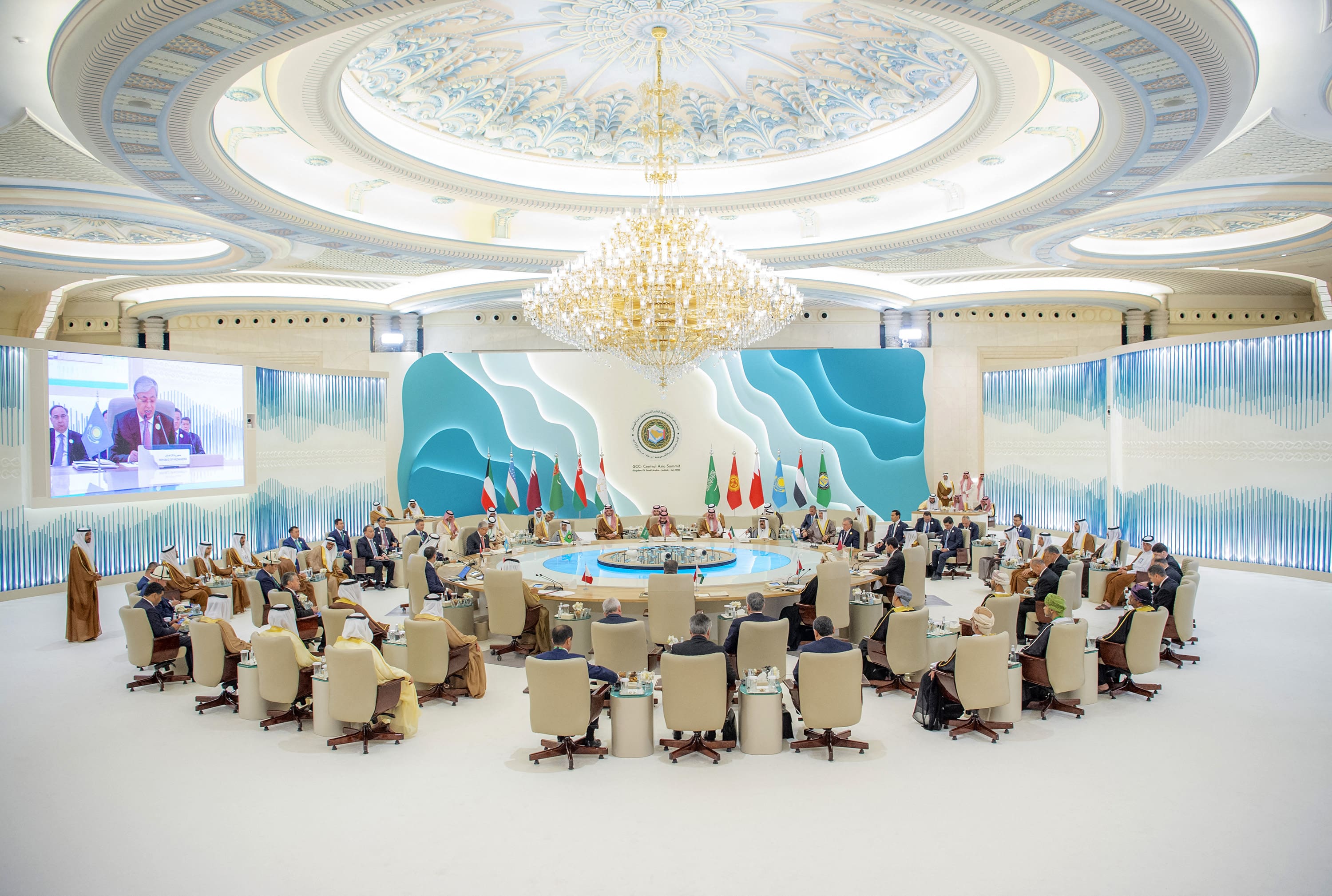
Central Asia is experiencing a shift in its geopolitical landscape, marked by increasing multipolarity rather than a straightforward transfer of power from Russia to China. This transition allows the five Central Asian republics—Kazakhstan, Uzbekistan, Turkmenistan, Kyrgyzstan, and Tajikistan—to engage in multi-directional diplomacy without a single dominant power controlling the region. Despite the continued influence of Russia, which maintains extensive security and economic ties, China has become an integral player in Central Asia through trade and infrastructure investments.
Gulf Cooperation Council (GCC) states, notably Saudi Arabia, the UAE, and Qatar, are showing keen interest in the region, primarily focusing on investment and infrastructure development. Their geographic distance from Central Asia allows them to engage without the legacy of colonial relations and without needing to choose sides between Russia and China. This positions the Gulf states as potential partners that can provide capital and expertise in return for access to valuable resources without imposing significant geopolitical costs.
The GCC is encouraged to coordinate its investment strategies across Central Asia to maximize their impact and transition from competitive engagements into complementary partnerships. Such coordination could enhance the Gulf’s overall presence in the region and effectively respond to varying challenges each Central Asian republic faces. Additionally, Gulf investors must navigate the complexities of potential secondary sanctions stemming from partnerships with Russian entities, underscoring the need for due diligence in strategic decisions.
Central Asia’s energy and mineral wealth, complemented by its strategic location connecting various trade routes, has gained global significance amid the ongoing shifts in international relations, such as the Russian-Ukrainian conflict and the resulting changes in energy supply chains. The recent focus on alternative transport routes, notably the Middle Corridor linking Asia and Europe while bypassing Russian territory, reflects this growing importance. The EU, U.S., and various Asian nations have recognized the region’s potential, leading to an expanded international interest and investment influx.
Researchers suggest that the GCC’s strategies in Central Asia should focus on encompassing various sectors, including energy, agriculture, and technology. By aligning investments with regional needs and prioritizing cooperation across logistical and infrastructural networks, the Gulf states can position themselves as key facilitators of trade between Central Asia and global markets.
The institutional framework established through the GCC-Central Asia strategic dialogue presents a promising foundation for building deeper ties moving forward. Notably, Saudi Arabia, the UAE, and Qatar have already embarked on substantial investment projects, focusing on renewable energy and technology infrastructure, signaling a long-term commitment to engagement.
As geopolitical interests continue to evolve, the efficacy of Gulf investments in Central Asia will depend on the ability to balance partnerships and navigate the complexities of regional dynamics. The opportunity exists for these nations to become vital links in the global economic network while ensuring sustainable development and mutual benefits for the Gulf states and Central Asia.
