




A recent systematic review has revealed significant disparities in access to radionuclide cancer therapies across Africa, emphasizing the continent’s growing cancer crisis. Published in Frontiers in Nuclear Medicine, the analysis assessed data from 47 studies involving nearly 2,850 records, covering all 54 African nations. It highlights the urgent need for improvements in infrastructure, workforce, and economic models to advance therapeutic nuclear medicine in the region.
The review indicates that the availability of therapies varies drastically. For instance, radioactive iodine-131, which is the most established treatment for differentiated thyroid cancer, is accessible in only 28 of the 54 African countries, translating to just 51.9 percent coverage. More advanced therapies are even less available: Lutetium-177-PSMA for metastatic castration-resistant prostate cancer is offered in only seven countries (13.0 percent), while Lu-177-DOTATATE, used for neuroendocrine tumors, is present in six countries (11.1 percent). Only three countries have access to I-131-MIBG, which treats neuroblastoma, and bone palliation agents like strontium-89 and samarium-153 reach only five nations.
The findings coincide with an alarming increase in cancer cases. According to GLOBOCAN 2022 data, Africa sees approximately 1.19 million new cancer cases and 764,000 cancer deaths annually. Projections suggest that by 2040, the number of new cases could rise to 2.1 million per year. The continent’s cancer mortality-to-incidence ratio stands at 0.64, significantly higher than North America’s ratio of 0.29, reflecting issues related to late-stage presentations and limited treatment access.
The review’s economic model highlighted the stark cost differences between locally produced and imported radiopharmaceuticals. For example, the cost of locally produced Lu-177-PSMA ranges from $1,500 to $3,000 per treatment cycle, compared to roughly $42,500 for imported versions—representing a reduction in cost of about 93 to 96 percent. Similarly, locally produced Lu-177-DOTATATE costs between $2,000 and $4,000, down from an imported price of $35,000. Even the cost of radioiodine decreases dramatically when produced locally, suggesting significant potential savings.
The review also reveals a critical shortage of healthcare professionals trained in nuclear medicine, with only about 0.18 nuclear medicine physicians per million people in Africa. This starkly contrasts with Europe and North America, which have 3.1 and 4.2 physicians per million, respectively. The analysis indicates that achieving just one physician per million would require over 1,400 additional specialists, with about 70 percent currently concentrated in just four countries: South Africa, Egypt, Nigeria, and Morocco.
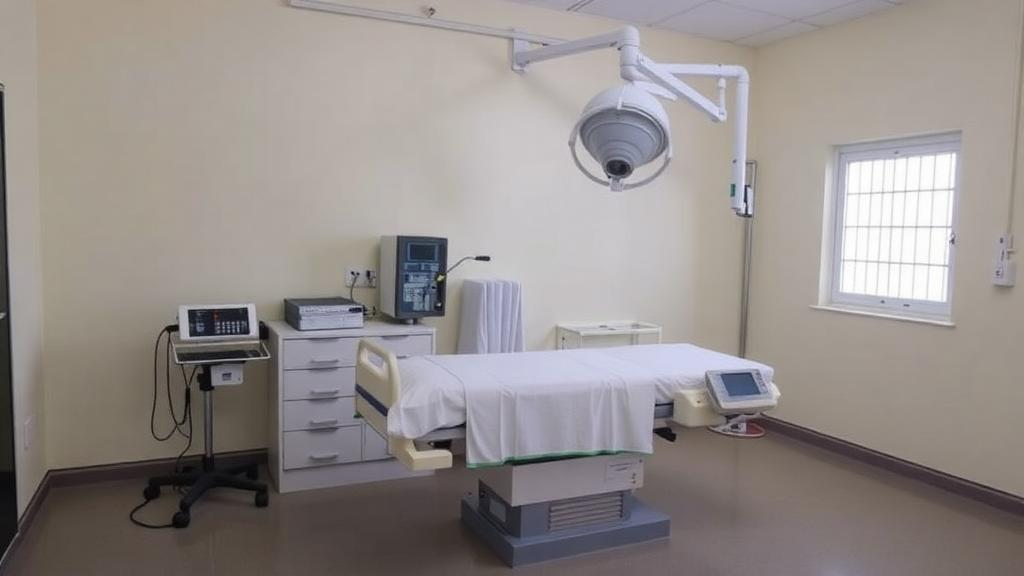
Infrastructure for nuclear medicine is also lacking. Three countries—South Africa, Egypt, and Morocco—account for much of the continent’s capacity, but the average number of gamma cameras stands at only 0.12 per million, well below the International Atomic Energy Agency’s minimum recommendation of 1.0. Alarmingly, 31 of the 54 nations do not possess any nuclear medicine facilities.
To address these challenges, the review proposes a phased strategic roadmap from 2026 to 2036. The first phase aims to expand radioiodine therapy access to 35 countries and establish three regional cyclotron hubs. A focus on improving Lu-177 therapies is planned for the second phase, with the introduction of new SPECT/CT systems. The third phase will aim for one camera per million population in 15 countries, along with AI-integrated reporting in 20 countries.
Despite some limitations in the study, the evidence indicates that increasing access to radionuclide therapies is not only critical due to the rising cancer burden in Africa, but also feasible with the right investments and political support.
