




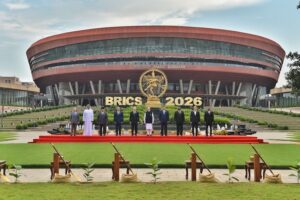
MOSCOW | 17 October 2026 — The recent BRICS summit held in New Delhi from September 11 to 13 marked a significant turning point for the group, as it aims to adapt its policies to a rapidly evolving global landscape while strengthening economic ties with Asia and Africa. Under the leadership of Indian Prime Minister Narendra Modi, the summit emphasized the need for resilience and cooperation amidst rising geopolitical tensions, highlighting the critical impact of worldwide conflicts on everyday people.
Modi, addressing leaders including Chinese President Xi Jinping, Russian President Vladimir Putin, and South African President Cyril Ramaphosa, stated, “The number of conflicts and tensions in the world is continuously increasing, and this is having an increasingly negative and far-reaching impact on the lives of ordinary people.” Founded in 2006, BRICS has grown to 11 members, now representing roughly half of the global population and a significant share of economic output. It seeks to enhance the representation of developing nations in global forums and advocate for alternatives to the existing Western financial systems.
New Delhi Declaration Focuses on Cooperation
During the summit, leaders adopted the New Delhi Declaration, which calls for increased use of local currencies in trade, improved cross-border payment systems, and collaboration on issues like food security and climate action. While the declaration signifies a united front for economic cooperation, it also reflects diverse opinions on critical regional and geopolitical matters, presenting diplomatic challenges amid ongoing global conflicts.
Analysts note that, although BRICS’s economic power is vast, its ability to act collectively remains limited. Some argue that BRICS should be judged not only on its potential to rival multinational institutions but also on its effectiveness in leveraging natural resources for increased regional trade and poverty alleviation. The group initially formed after the 2008 financial crisis aims to pursue reforms rather than destabilize the current global order.
China plays a central role within BRICS, contributing about 70% of the group’s total GDP. The financial structure of BRICS includes the New Development Bank, which mainly finances infrastructure projects. As of 2025, the bank has approved over $32 billion for various initiatives, reflecting its growing influence and capacity for cross-border economic activities.
Finance Ministers from BRICS nations have reiterated calls for reforms in global financial institutions such as the International Monetary Fund and the World Bank, emphasizing the need for a more representative and accountable governance structure. They voiced concerns about trade practices and encouraged progress on digital currency linkages among member states.
In terms of regional collaboration, South Africa, Ethiopia, and Egypt are positioning themselves as significant African voices, enhancing their strategic economic ties within BRICS while maintaining relationships with Western powers. Leaders from these countries have emphasized the importance of building a cooperative framework that mutually benefits all parties involved.
The Central Asian landscape is evolving as trade relationships with China increase, posing new challenges and opportunities for Russia’s influence in the region. Notably, as the BRICS group continues to grow, its members are focused on establishing a robust, alternative economic order that champions economic development and cooperation among nations.
As India concludes its presidency, the chairmanship of BRICS will be handed over to China in 2027, marking a transition that seeks to further solidify the group’s role as a key player in global geopolitics and economics.
