




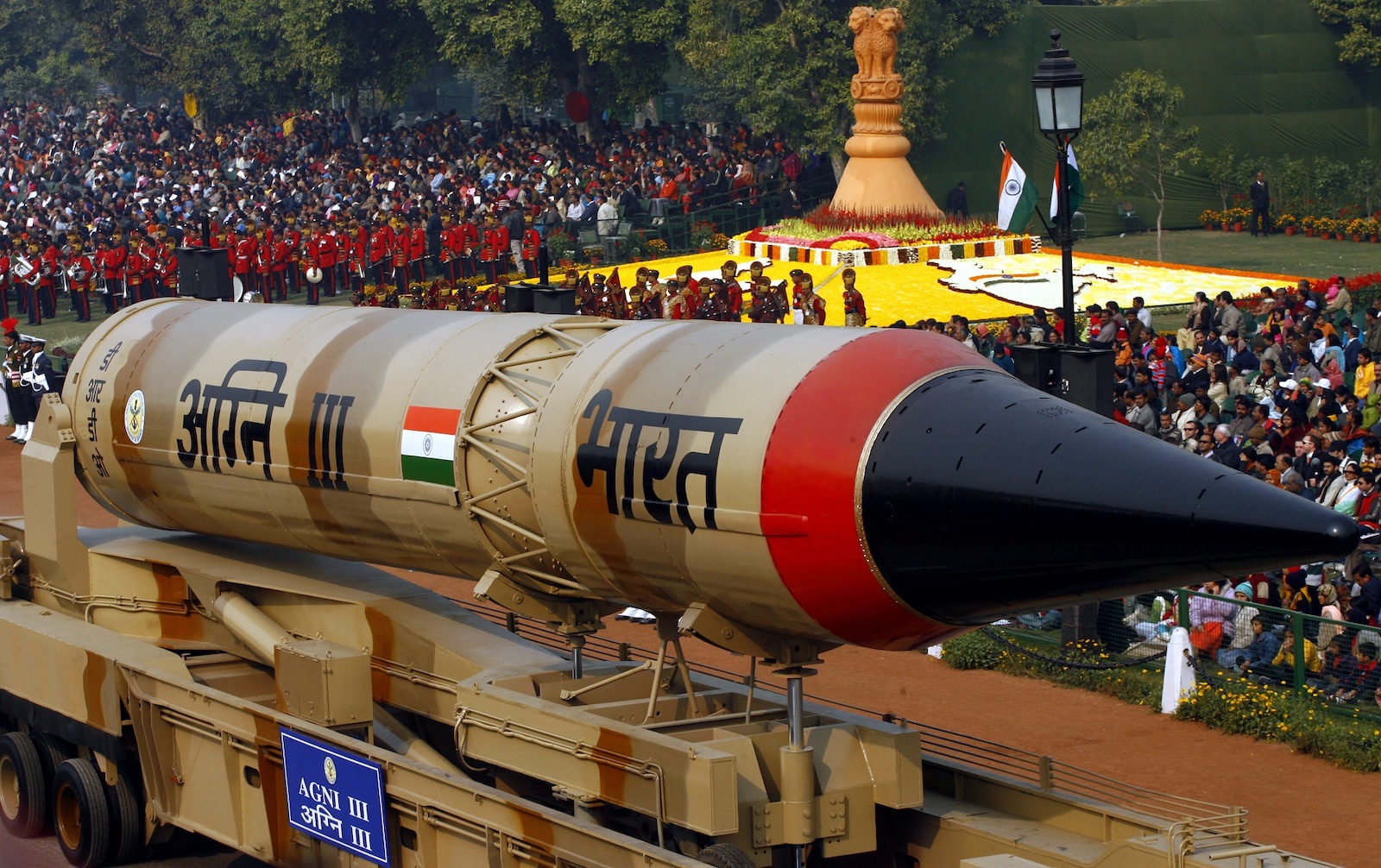
A recent analysis highlights the evolving complexities of nuclear dynamics in Asia, suggesting that U.S. strategic thinking may be overlooking critical interconnections between key regional players. The study describes the merging of the U.S.-Russia-China and China-India-Pakistan triangles into a single nuclear hexagon that poses significant implications for regional and global security.
The report argues that U.S. policymakers tend to focus primarily on the U.S.-Russia-China triangle, often ignoring the intertwined nature of the two triangles, which have become increasingly relevant as they influence one another. The interconnected hexagon is seen as a driving force behind arms races and recalibrations of military posture among these nations.
Japan and South Korea, U.S. allies in the region, are directly impacted by this emerging nuclear geometry, which shapes their security strategies and deterrence needs. While North Korea continues to be viewed as a localized threat, the report emphasizes that it does not significantly alter the strategic calculations of the major powers involved.
China plays a crucial role as a link between the two triangles. Actions taken by Beijing, whether to counter U.S. moves or respond to Russia’s military developments, trigger reactions from other nations, creating a feedback loop. For example, as China develops advanced military capabilities, India moves to enhance its deterrent capacities, prompting Pakistan to expand its own arsenal.
This ongoing interplay among nations introduces several risks, particularly in terms of operational decision-making timelines. Current flight times for missiles in Southern Asia can be as short as five to ten minutes, compared to the thirty-minute decision window common during the Cold War. Such compressed timelines can lead to heightened levels of military readiness and rapid responses to perceived threats.
The report details various factors contributing to this precarious situation. It notes the influence of emerging technologies, such as artificial intelligence, which may lead to miscalculations in critical moments. It also highlights a lack of transparency, particularly on China’s nuclear capabilities, which complicates regional stability and fosters a “race to the unknown.” The mixing of military readiness with civilian nuclear expansion in several Asian countries further undermines nonproliferation efforts.
To address these issues, the analysis proposes several strategies for the U.S. government, including recognizing the significance of regional dynamics, managing security dilemmas, and improving transparency regarding nuclear capacities. It emphasizes the importance of establishing frameworks for escalation control and reinforcing international norms against nuclear proliferation.
The evolving landscape of nuclear relations in Asia signifies that the region may increasingly shape the future of global security. As analysts have pointed out for decades, the dynamics at play now demand a comprehensive, Asia-focused approach to U.S. nuclear strategy and international relations.
