




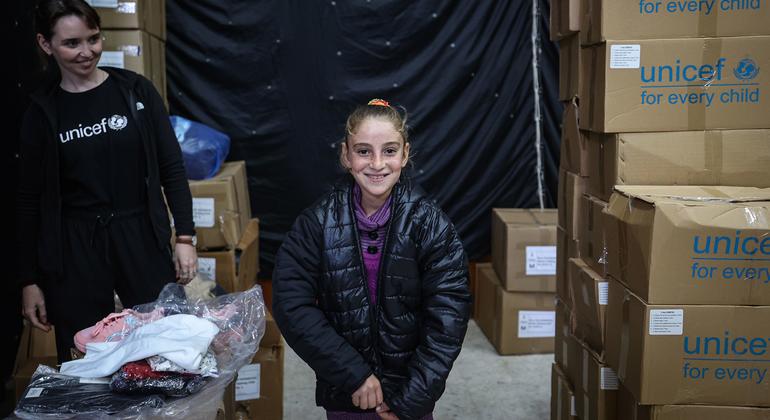
As winter approaches, humanitarian agencies are stepping up efforts to provide aid to vulnerable populations in Gaza, the West Bank, and Haiti. With harsh conditions expected, officials are warning of the urgent need for assistance to prevent further hardships.
In Gaza, nearly 84 percent of the population, more than 1.76 million individuals, are living in overcrowded displacement sites or damaged shelters, which increases their susceptibility to freezing temperatures, heavy rain, and potential flooding. Reports indicate that at least 11 children, including infants, succumbed to hypothermia during the previous winter.
The deteriorating situation in the West Bank is also concerning. UNICEF has highlighted that violence, displacement, and restricted movement due to an ongoing financial crisis are compounding the challenges faced by vulnerable families this winter. The agency emphasizes the necessity of flexible and timely funding to pre-position supplies for the upcoming season.
UNICEF and OCHA Initiatives
UNICEF aims to provide warm clothing, thermal blankets, digital cash assistance, and reinforcements for emergency shelters through its funding appeals. In related news, the UN Humanitarian Coordinator for the Occupied Palestinian Territory, Ramiz Alakbarov, announced that the UN’s aid agency would allocate $2 million to support health facilities in Gaza for the next four months.
Meanwhile, in Haiti, emergency support from the UN’s Food and Agriculture Organization (FAO) is reaching about 65,000 people across 10 municipalities in Artibonite, Centre, and Ouest. This initiative aims to restore local food production amid severe hunger crises affecting more than half of Haiti’s population. The FAO’s program entails delivering over 205 tonnes of crop and vegetable seeds as well as 160,000 small livestock to improve food security for vulnerable households.
FAO Representative in Haiti, Pierre Vauthier, underscored the significance of emergency food production as a life-saving measure, enabling families to reduce their reliance on external food aid. Local communities are also actively involved in determining the aid distribution to ensure the most pressing needs are addressed.
As part of a future phase, additional livestock will be distributed to over 29,000 families, further promoting self-sufficiency and nutritional support.
Why It Matters
The initiatives by UNICEF and FAO are critical, as they aim to mitigate the suffering of vulnerable populations facing winter’s harsh challenges. Effective humanitarian responses can help avert potential crises and empower communities to rebuild and sustain their livelihoods amidst ongoing political and economic instability.
