




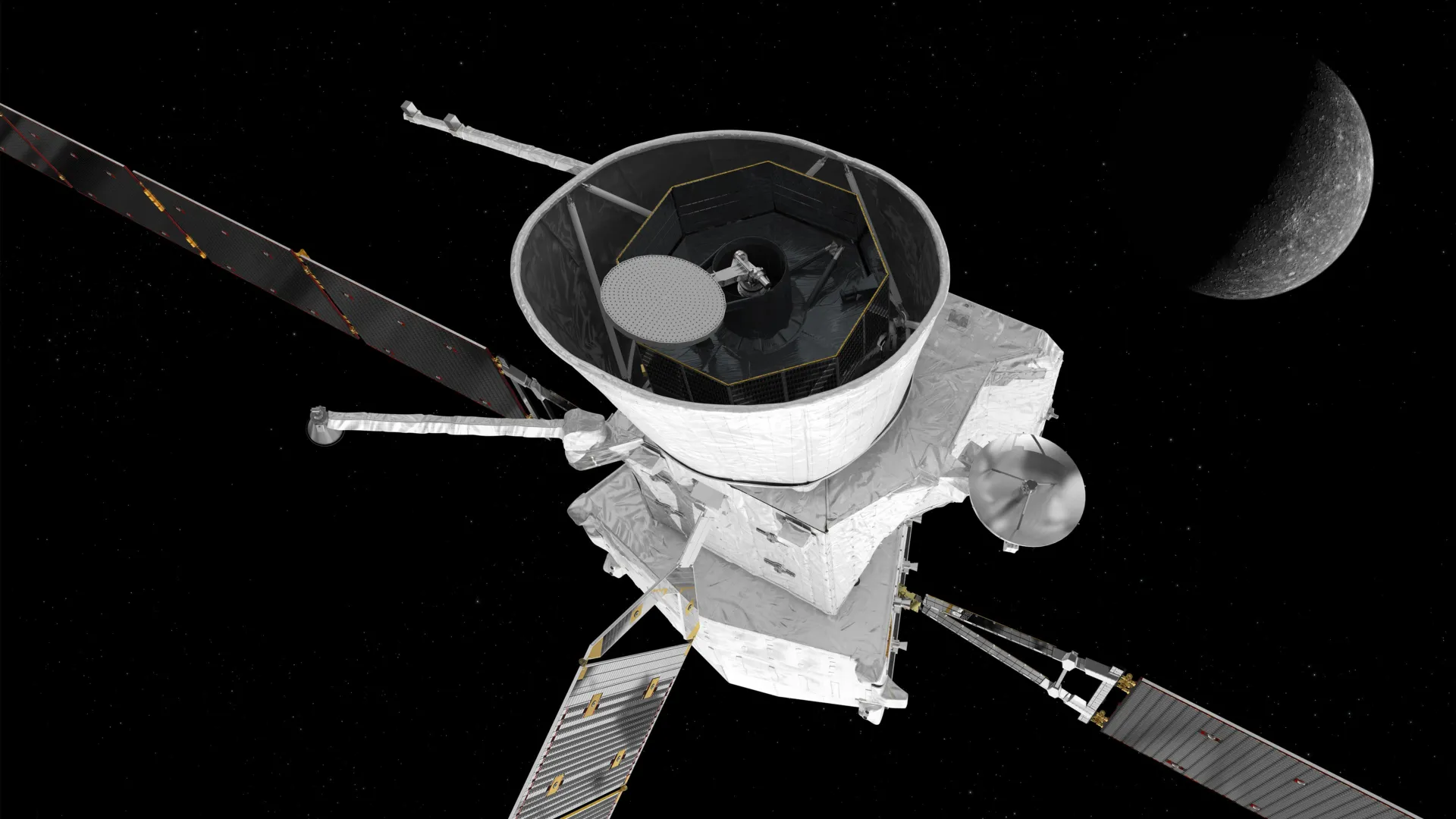
After an eight-year journey covering 10 billion kilometers, the Mercury Imaging X-ray Spectrometer (MIXS) has made its first astronomical observations, detecting X-rays from the Crab Nebula. This significant milestone is part of the European Space Agency’s (ESA) and Japan Aerospace Exploration Agency’s (JAXA) BepiColombo mission, aimed at exploring Mercury.
Scientists at the University of Leicester are currently evaluating the initial data from MIXS, which has successfully passed a preliminary assessment just as the spacecraft prepares to enter orbit around Mercury on November 21. Engineers monitored MIXS during its journey, but it was not until September that the instrument was able to directly observe space, following the separation of the Mercury Transfer Module (MTM) from the scientific orbiters, the Mercury Planetary Orbiter (MPO) and the Mercury Magnetosphere Orbiter (MMO), also known as Mio.
First Observations and Performance
The team chose the Crab Nebula as MIXS’s first target due to its brightness and reliability as an X-ray source, located approximately 6,500 light-years from Earth. The first observation campaign occurred on September 11 and 12, during which the telescope conducted 55 orientation adjustments over 39 hours to collect data. Notably, MIXS achieved better angular resolution than it had during ground tests in 2015, indicating that the instrument remains in good working order after its long journey.
Professor Emma Bunce, Principal Investigator for MIXS, remarked on the successful operation of the instrument, stating, “We have waited a long time to make measurements with MIXS and it is fantastic to see it operating brilliantly in space.” She noted the absence of issues related to stray light and confirmed that the detector showed no signs of radiation damage, suggesting that MIXS performed exceptionally well in the harsh environment of space.
However, the team did find some minor effects linked to self-fluorescence from sunlight striking the optics, which is not expected to interfere with observations of Mercury’s surface. The scientists anticipate making further adjustments to optimize the instrument before it begins its primary science mission.
BepiColombo’s mission aims to investigate Mercury’s chemical composition and geological history to understand its formation and evolution. MIXS will help create a global map of the elements on Mercury’s surface by detecting fluorescent X-rays emitted when solar X-rays interact with the planet’s rocks.
Dr. Adrian Martindale, an Instrument Scientist for MIXS, expressed satisfaction with the initial observations, stating, “This first data is mind-blowing to me.” His personal connection to the project, which he joined as an undergraduate in 2003, highlights the significance of this achievement for both him and the scientific community.
BepiColombo, which began its arrival phase on September 3, will see the two science orbiters separate on December 9 to 10 before the primary science phase starts in April 2027. These efforts aim to uncover the mysteries of Mercury, a planet that has long remained enigmatic despite its proximity to the Sun.
The development and construction of MIXS involved collaboration among several European research institutions and technology companies, with funding primarily from the UK Space Agency, along with contributions from ESA and other partners.
