




KINGSTON, R.I. — On November 2, 2026, the National Oceanic and Atmospheric Administration’s Ocean Exploration Cooperative Institute, located at the University of Rhode Island’s Narragansett Bay Campus, held a showcase focusing on underwater systems and autonomy. This event, which took place in early October, featured two companies specializing in blue technology, Sonardyne and Voyis.
The showcase spanned two days and gathered oceanographers, engineers, industry experts, and other participants to discuss advancements in subsea technology and explore innovative approaches to ocean exploration and monitoring.
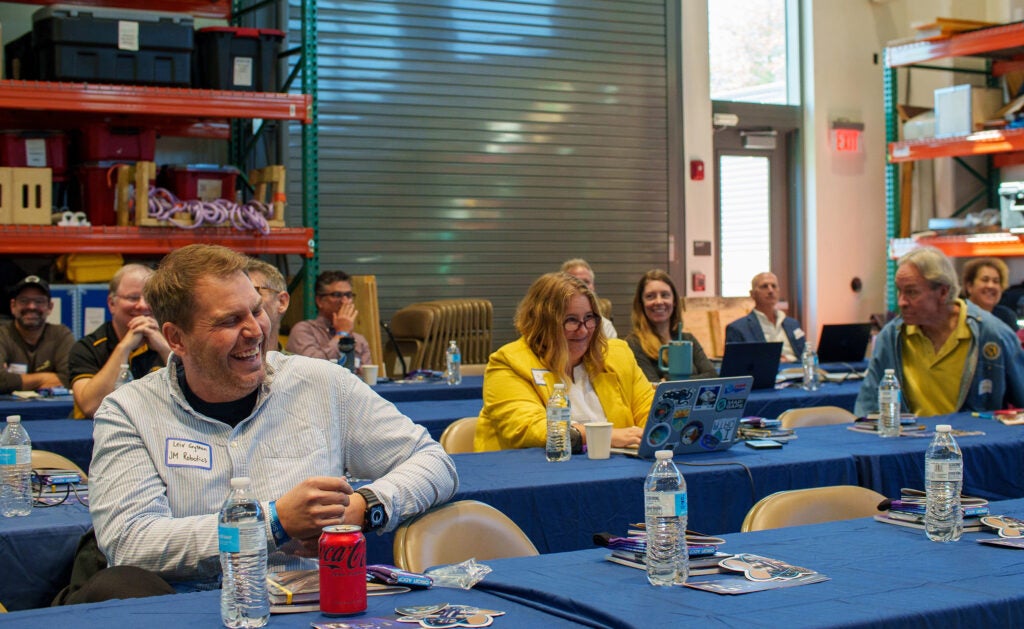
Sonardyne specializes in underwater technology for tracking, navigation, communication, and subsea positioning, while Voyis creates high-resolution underwater laser scanners and optical cameras for subsea vehicles. The showcase underscored how these technologies are utilized in ocean science, promoting collaboration between industry and researchers at URI.
“Federal, academic, and industrial collaborators each bring specific advantages to the ocean exploration and science enterprise but also face unique challenges,” said Adam Soule, executive director of NOAA’s Ocean Exploration Cooperative Institute. He emphasized the importance of collaboration to overcome these challenges.
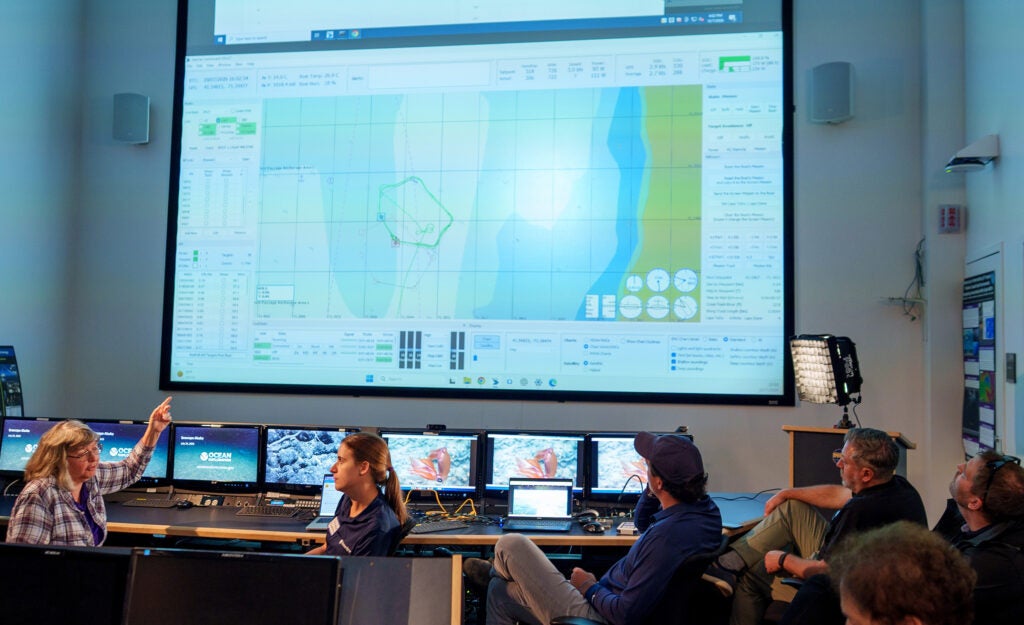
The event featured discussions on field experiences and demonstrations of new capabilities through in-water tests. Michelle Barnett, ocean science business development manager at Sonardyne, highlighted the value of understanding the ocean research community’s needs, which informs technology development for scientific applications.
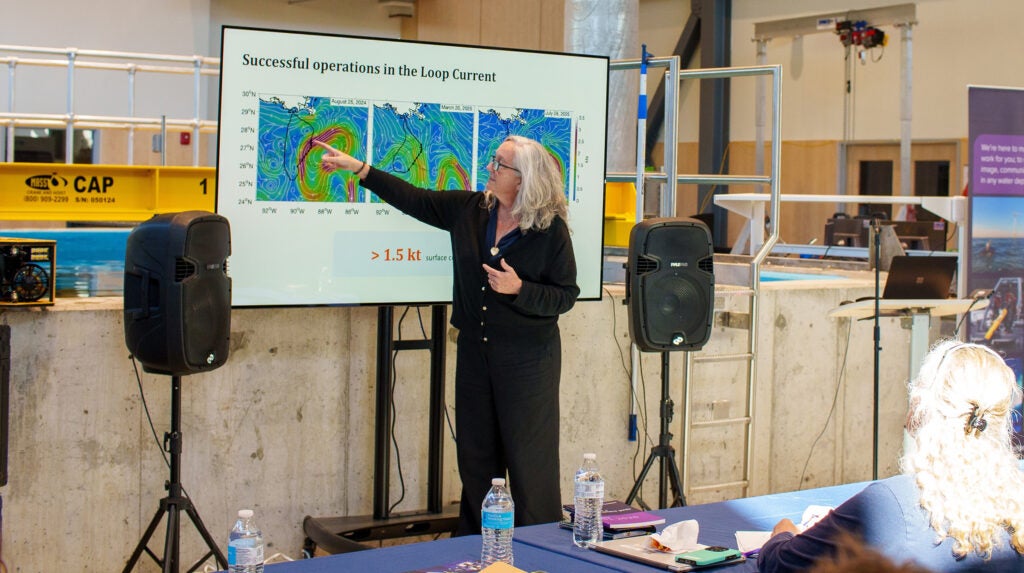
The first day included presentations from researchers showcasing how Sonardyne and Voyis technologies enhance their work. Professor Kathleen Donohue discussed her team’s use of Sonardyne instruments to gather data from the Loop Current, with deployments reaching depths of 1,800 to 3,200 meters.
The URI team employed various bottom-mounted instruments to monitor deep ocean currents. “Together, this system provides scientists with the opportunity to collect near-real-time deep ocean current observations in regions previously inaccessible to conventional observational strategies,” said Donohue.
Andrew Davies, a professor at URI, highlighted advancements in autonomous underwater observations. His latest design, the ALBEX 2.0, features an improved operational platform that integrates Sonardyne’s technology for enhanced recovery capabilities.
Jason Fahy, associate director of NOAA OECI, shared the success of a student team that used URI’s remotely operated vehicle, Rhody, to document 17 shipwrecks in Lake Ontario. The project utilized high-resolution imaging to create detailed records for historical preservation.
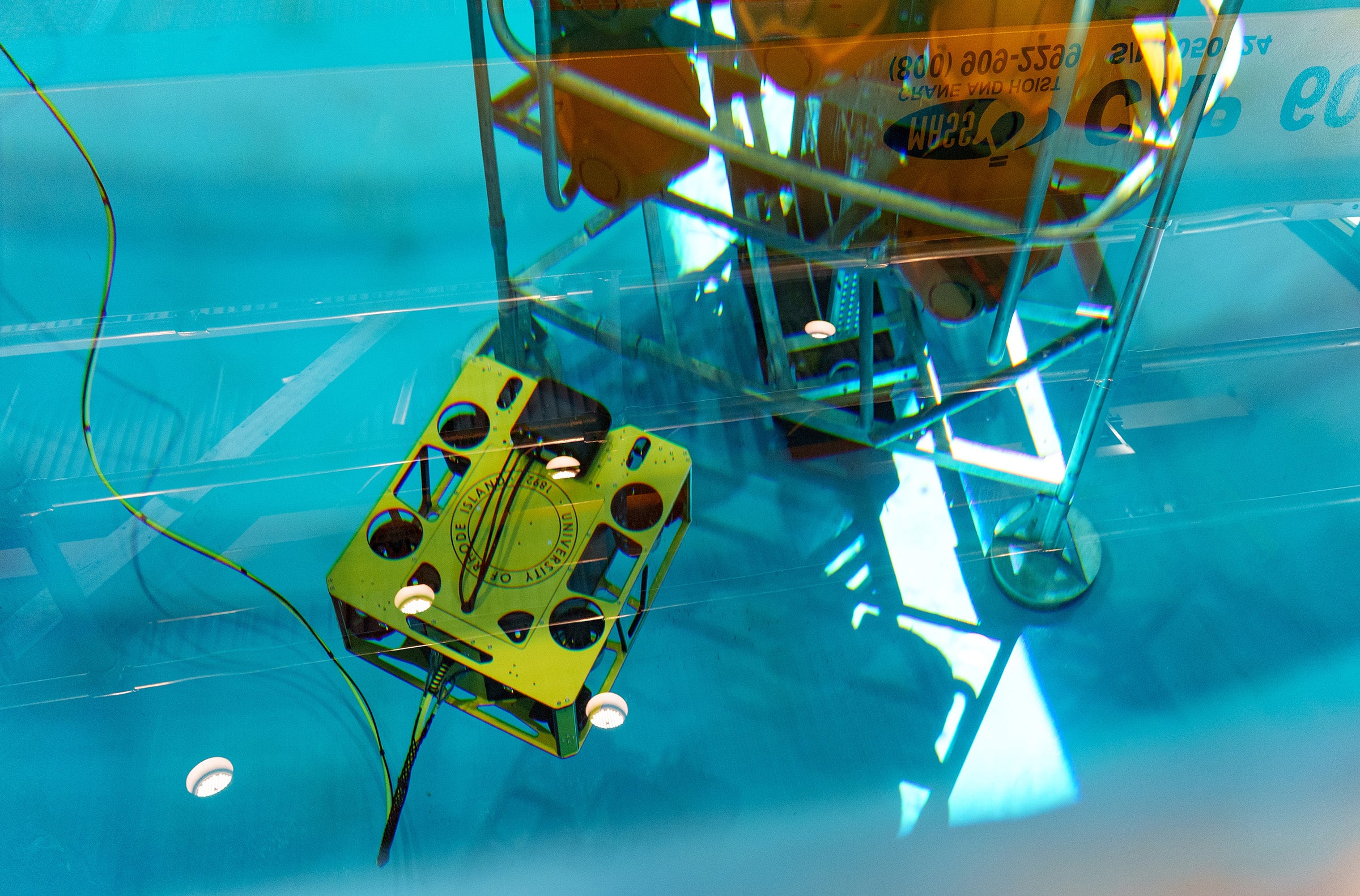
The showcase’s second day featured in-water demonstrations of the showcased technologies. Participants engaged with the Ocean Robotics Laboratory’s equipment, particularly the operations of the Remotely operated vehicle. The day culminated with live demonstrations from URI’s research vessel, R/V Warfish, incorporating hands-on experiences with autonomous underwater vehicles.
As showcased technology continues to develop, further collaboration between academic institutions and industry partners is expected to enhance future ocean exploration efforts.
