




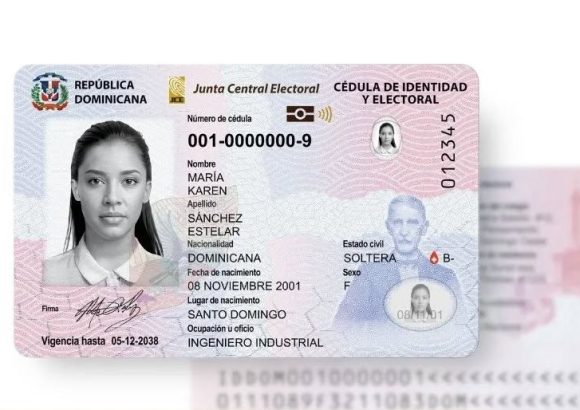
Santo Domingo. A new bill has been introduced to the Dominican National Congress aimed at creating a framework to reconstruct identities and regularize documentation for individuals who have lived under a Dominican identity card but face legal challenges due to inaccuracies or inconsistencies in their Civil Registry records. The proposal comes from Representative Maribel Almánzar de Ogando of the Modern Revolutionary Party (PRM).
The initiative seeks to fill gaps left by previous regulations, specifically Law No. 169-14, which did not extend its benefits to records containing false information. Almánzar highlighted that many individuals affected by these issues have built their civil, family, and economic lives on official documents issued by the state, including marriages, child registrations, property acquisitions, and employment contracts.
The bill acknowledges that historical and institutional failures within the Civil Registry have led to multiple cases where people received official documents that were later deemed questionable. This has the potential to infringe on their fundamental rights to identity, equality, and legal recognition.
A key aspect of the proposed regime is to establish procedures for amending irregular records while safeguarding the legal effects of actions taken under those contested identities. This would encompass a range of legal agreements, including marriages, birth registrations, contracts, pensions, property rights, and inheritances. The aim is to protect the rights of individuals and their families who have operated under potentially flawed documentation.
The bill also proposes a shared responsibility between the state and the affected individuals, particularly in instances where irregularities stem from deficiencies in the Civil Registry. By doing so, it aims to maintain legal certainty and stability across civil and financial systems.
In its explanatory memorandum, the proposal asserts that correcting past registration inaccuracies should not lead to the loss of rights accrued over years under valid state-issued documents. It emphasizes that the initiative intends to provide legal certainty and address cases of prolonged civil vulnerability, rather than legitimize any unlawful behavior.
