




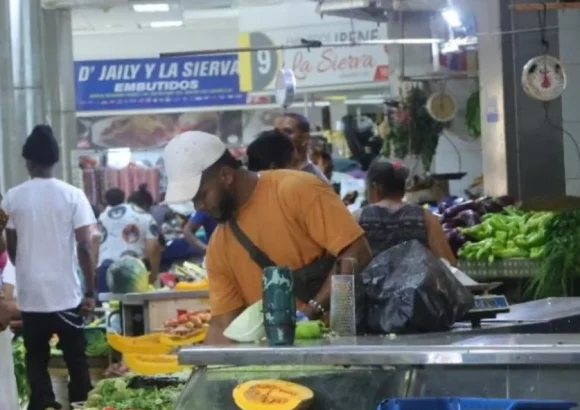
Rising food prices have become a pressing concern for many Dominicans, who are experiencing the financial strain of escalating costs. Consumers report that the prices of basic food items continue to rise, leading to a shared sentiment that their budgets are increasingly stretched.
Residents across the country have expressed disappointment with government responses, indicating that subsidies have not alleviated their struggles. While officials attribute the increases to global oil price hikes, many citizens feel the government has not adequately supported them during this challenging economic period.
Shopkeepers, merchants, and street vendors echo these frustrations, highlighting the difficulty of providing basic necessities for families. Ramón Peralta, a father of three, noted that his family’s grocery budget has surged by more than 50% in recent months, resulting in fewer purchases every two weeks. “Dominicans are eating because we have to, but we’re doing it with all our might. We’re stretching our money as far as it will go. Things are tough,” he stated in an interview.
In Santo Domingo’s markets, the prices for staple foods remain high: chicken is priced between RD$65.00 and RD$68.00 per pound, rice ranges from RD$38.00 to RD$40.00 per pound, and red beans cost around RD$70.00 per pound. Additionally, a carton of eggs is sold for RD$210.00, while plantains range from RD$25.00 to RD$30.00 each.
Isabel Triburcio, a local shopper, characterized these prices as unaffordable, emphasizing that it is not just about food costs, but also about managing other financial obligations with stagnant salaries. In reaction to President Luis Abinader’s admission of a cost-of-living crisis, the public has voiced discontent, arguing that the government has yet to demonstrate significant measures to address their needs.
Concerns over economic growth and tourism further complicate the issue. Eladio Contreras questioned the advantages of high growth rates and increased tourism if basic living costs remain prohibitive. He remarked, “We can’t afford to eat decently because we don’t have enough money. We lack quality services. We’re the same or worse off than under another Government.” Residents also claim that recent tax reforms disproportionately burden the middle and lower classes.
Fixed Incomes, the Most Affected
In an exclusive interview, President Abinader acknowledged that those with fixed incomes are particularly struggling with rising living costs in the Dominican Republic. He stated, “We really have a problem with the high cost of living. The impact is being felt.” This acknowledgment may signal the government’s recognition of the urgent need to address economic challenges facing many citizens.
