




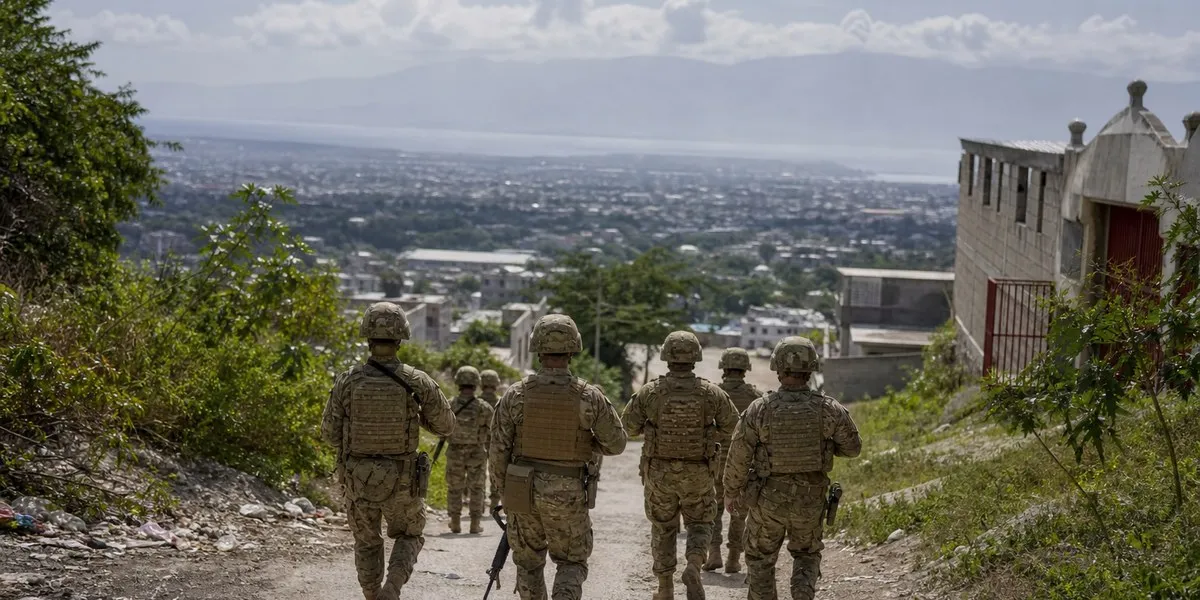
Dominican Republic President Luis Abinader announced that his government is providing logistical and intelligence support to approximately 2,500 Salvadoran troops currently engaged in operations against violent gangs in Haiti. This collaboration follows discussions with Salvadoran President Nayib Bukele.
Coordination Emphasized
Abinader highlighted the need for coordination between Salvadoran forces and the Dominican military to effectively bolster their efforts. The Salvadoran troops, deployed recently, are primarily operating outside of the UN-backed multinational anti-gang force, prompting Abinader’s call for better alignment.
Igor Rugwiza, spokesperson for the multinational force, indicated that close cooperation with Haitian authorities and international partners is essential for achieving common security goals. He emphasized the importance of effective coordination among all security entities in Haiti to ensure sustainable improvements in safety. Rugwiza stated that all operations are conducted in accordance with the force’s mandate, command structure, and human rights obligations.
Haiti’s Prime Minister Alix Didier Fils-Aimé expressed gratitude to President Bukele for his nation’s support and indicated a plan to visit El Salvador next week to discuss the future presence of Salvadoran troops in Haiti.
In a recent operation, Salvadoran troops, alongside Haitian police, targeted the residence of Wilson Joseph, also known as Lanmo San Jou, who is identified as the leader of the 400 Mawozo gang. While the operation destroyed both his home and the gang’s headquarters, Joseph escaped unharmed.
The deployment of Salvadoran troops came after an October 18 incident in which four Salvadoran aviation technicians disappeared in territory controlled by gangs. The Abinader administration did not disclose specific details regarding the support being provided to El Salvador.
Amnesty International has urged both the El Salvador and Haiti governments to ensure that the operations of Salvadoran troops adhere to international human rights standards. The organization is also calling for transparency in the troop deployment agreement, specifically regarding rules of engagement, oversight mechanisms, and protections for reporting alleged violations.
Experts have underscored the complexity of security operations in Haiti, with multiple forces, including Haitian police, UN-backed troops, a private security firm founded by Erik Prince, and Salvadoran soldiers, all engaging with gangs. The lack of clear coordination among these various security structures presents ongoing challenges.
