




Recent scientific discoveries have overturned long-standing beliefs about various animal behaviors and characteristics, revealing new insights into the natural world. These findings, emerging in 2026, challenge previously accepted notions about species such as bats, honeybees, and penguins.
Bats Don’t Move Their Eyes
For nearly 80 years, it was widely accepted that bats did not move their eyes during flight, a belief supported by the work of vision scientist Gordon Walls. This idea suggested that bats relied heavily on echolocation while their eyes remained fixed like those of other nocturnal animals. However, a recent study published in Current Biology by researchers at Johns Hopkins University has challenged this view.
The researchers observed Seba’s short-tailed bats and found they could indeed move their eyes to track objects in their visual field. They discovered that when the bats’ heads turned, the eyes tracked motion across a span of 10 degrees before quickly returning to a central position. This eye movement is believed to be linked to the bats’ inner ear functions, providing a new understanding of their visual capabilities during flight.
Honeybee Flights Follow Specific Routes
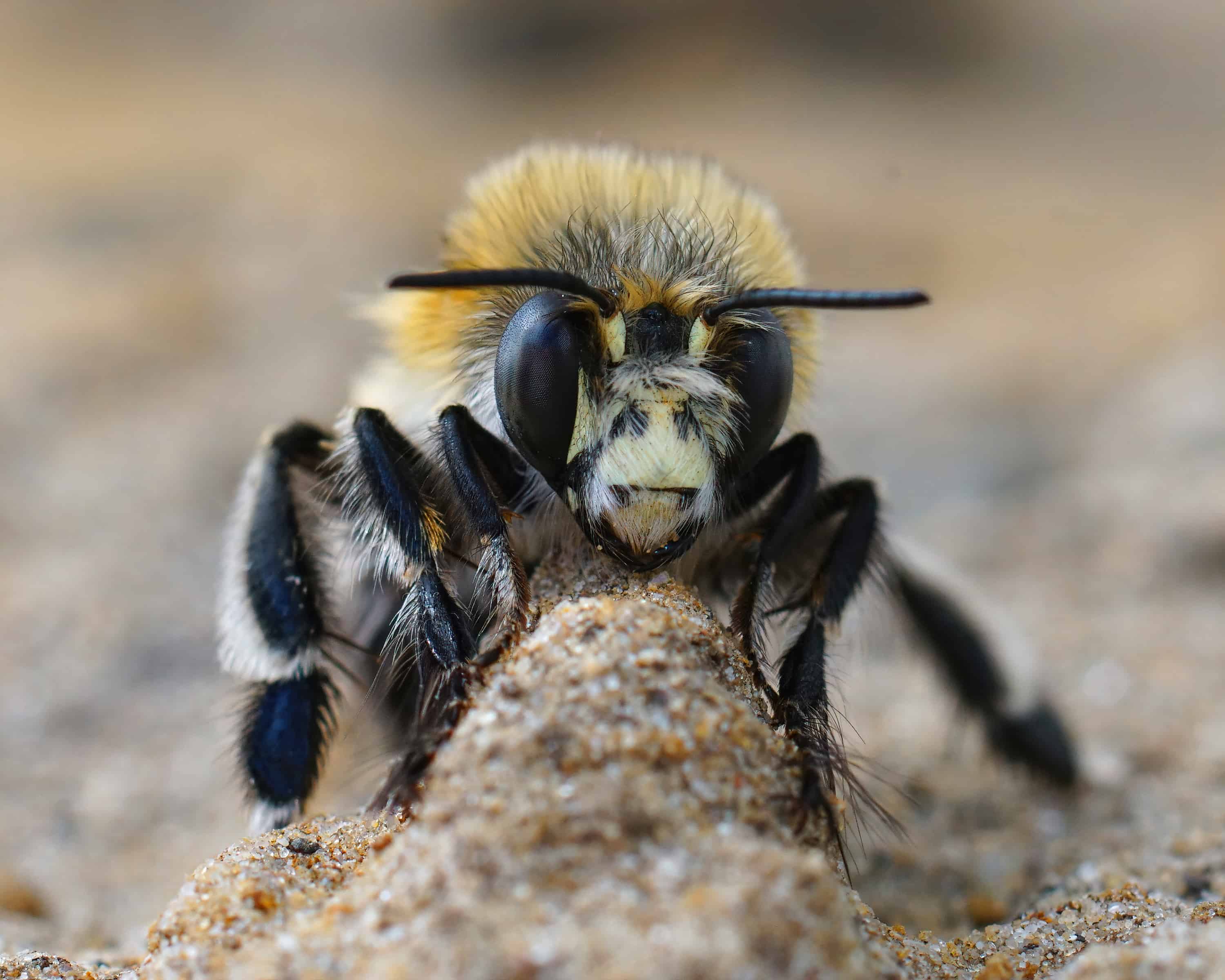
Honeybees, often regarded as chaotic flyers, have demonstrated more navigational skill than previously recognized. A study conducted by a team from the University of Freiburg utilizing Fast-Lock On tracking technology revealed that honeybees followed specific flight paths across tested agricultural areas. These findings, also published in Current Biology, showed that bees navigated with precision, avoiding obstacles while maintaining repeated routes.
This valuable research redefines the understanding of insect intelligence, suggesting that honeybees exhibit sophisticated spatial awareness in their navigation.
Gentoo Penguins Are Made Up of Four Different Species
Gentoo penguins, previously classified as a single species, have been identified as four distinct species following a genetic study by an international team of researchers from the United States and Chile. Their work, published in Communications Biology, involved analyzing genetic data from various gentoo colonies. The analysis revealed significant genetic differences among populations, designating them as Antarctic, subantarctic, South Georgia, and South Indian Ocean species.
This discovery brings new attention to conservation efforts, as gentoo penguins face threats from climate change and habitat loss.
Queen Bumblebees Can Survive Underwater
Contrary to popular belief, queen bumblebees can survive underwater, as demonstrated by research from the University of Ottawa. The study investigated how bumblebee queens enter diapause—a state that significantly reduces their metabolic rate by approximately 99%. This adaptation allows them to thrive in submerged conditions by utilizing anaerobic metabolism to extract oxygen from the water.
Follow-up experiments confirmed that queens could withstand being submerged for extended periods, suggesting a surprising resilience to water exposure.
Blue Megaleledonidae Octopus Can Live in Deep Tropical Water
In a breakthrough discovery, researchers have identified a new species of octopus, Microeledone galapagensis, found in deep tropical waters near the Galapagos Islands. Unlike its relatives that typically inhabit cold Antarctic environments, this octopus was located over 5,900 feet beneath the surface in comparatively warm waters. Researchers successfully employed CT imaging to study this specimen, which was also found to carry intact eggs, adding further significance to the discovery.
The continued exploration of marine life in the Galapagos Islands promises to yield more surprising findings as researchers expand their understanding of biodiversity.
