




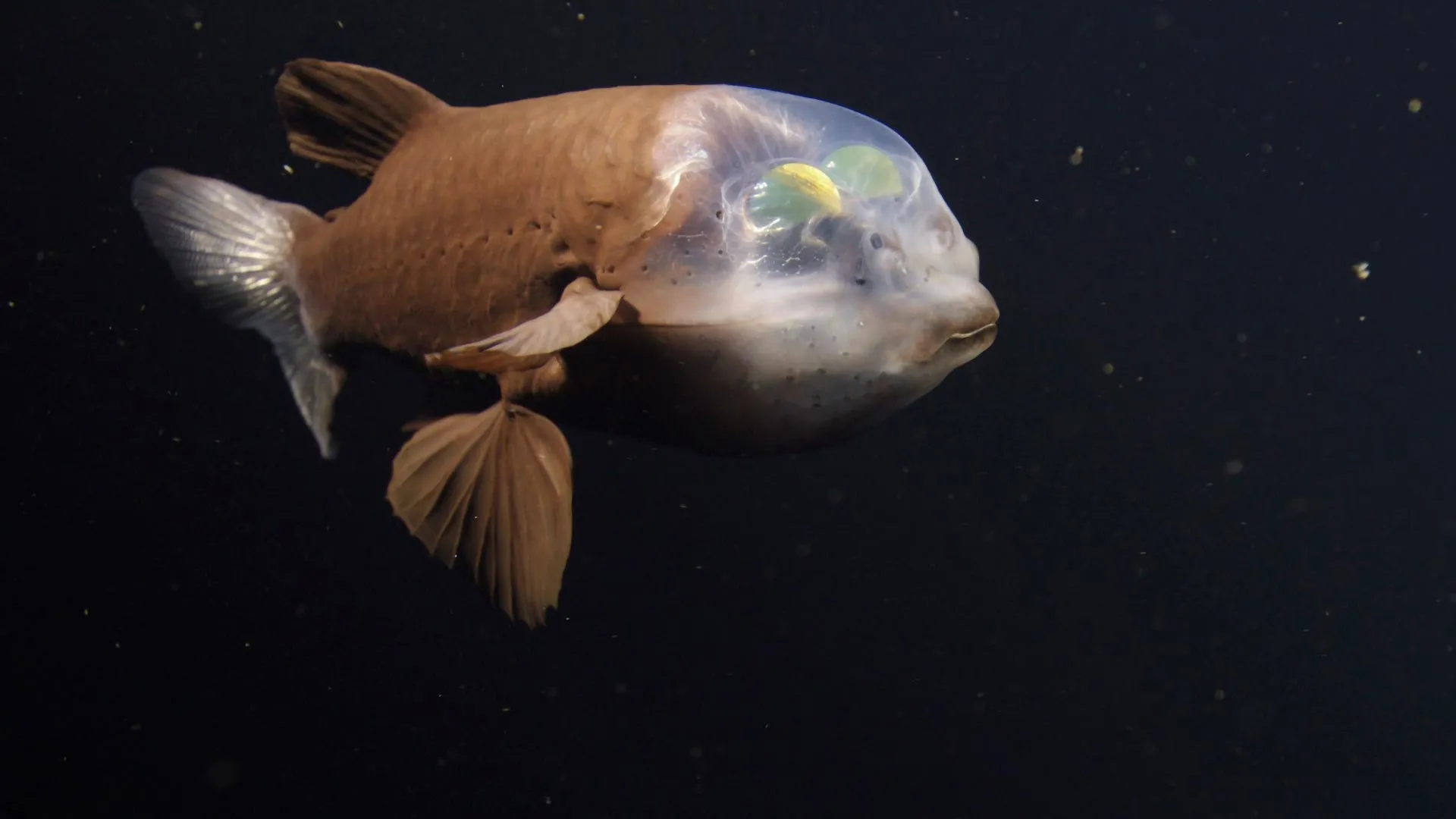
A deep-sea expedition nearly 2,000 feet underwater has yielded stunning footage of the barreleye fish (*Macropinna microstoma*), a rare species known for its transparent head and unique rotating eyes. The discovery was made by scientists from the Monterey Bay Aquarium Research Institute (MBARI) aboard the *David Packard* research vessel during an eight-day mission focused on underwater biodiversity.
The encounter occurred approximately 90 kilometers (55 miles) offshore at a depth of about 600 meters (1,970 feet). Members of MBARI’s Biodiversity and Biooptics Team were operating the remotely operated vehicle (ROV) *Doc Ricketts* when the barreleye swam into view, providing the scientists an extraordinary opportunity to observe a species that has been seen only 11 times in nearly four decades of ocean exploration.
Senior Scientist Steven Haddock expressed the excitement of the moment, stating, “Seeing a barreleye fish is a rare treat. Crew from across the ship joined the science team in the control room, mesmerized by this remarkable animal.” He emphasized the importance of deep-sea creatures in promoting awareness and stewardship of the ocean.
The barreleye sighting came as the team was wrapping up their operations for the day. Research Specialist Shannon Johnson spotted the fish just as the ROV was being maneuvered toward the surface. News of the sighting quickly reached crew members who had begun cataloging specimens in the ship’s wet lab, prompting them to return to the control room to witness the rare fish.
Besides this remarkable encounter, the Diving Deep for Delicate Drifters expedition aimed to study gelatinous animals such as jellyfish and ctenophores. The research team utilized blue-water scuba dives and ROV surveys to explore various marine habitats at different depths.
The barreleye fish is known for its distinct hunting strategy in the ocean’s twilight zone. It can remain nearly motionless while observing the silhouettes of potential prey above thanks to its upward-facing tubular eyes. Once a target is detected, the fish can rotate its eyes within its transparent head covering, allowing it to track its meal effectively.
The scientists filmed the barreleye for approximately 20 minutes, utilizing high-resolution 4K cameras to capture detailed images of its anatomy. They adjusted lighting conditions to enhance visibility of its transparent head, which is essential for protecting its sensitive eyes while foraging among stinging siphonophores.
This sighting marks a significant milestone for MBARI, representing the first 4K footage of the barreleye fish and the inaugural observation from their new flagship research vessel, the *David Packard*. Despite conducting around 7,000 ROV dives over nearly four decades, the rarity of the barreleye encounter highlights both the elusive nature of deep-sea species and the ongoing discoveries of marine biodiversity.
The research expedition received support from the David and Lucile Packard Foundation, which has a long-standing commitment to scientific research initiatives conducted by MBARI.
