




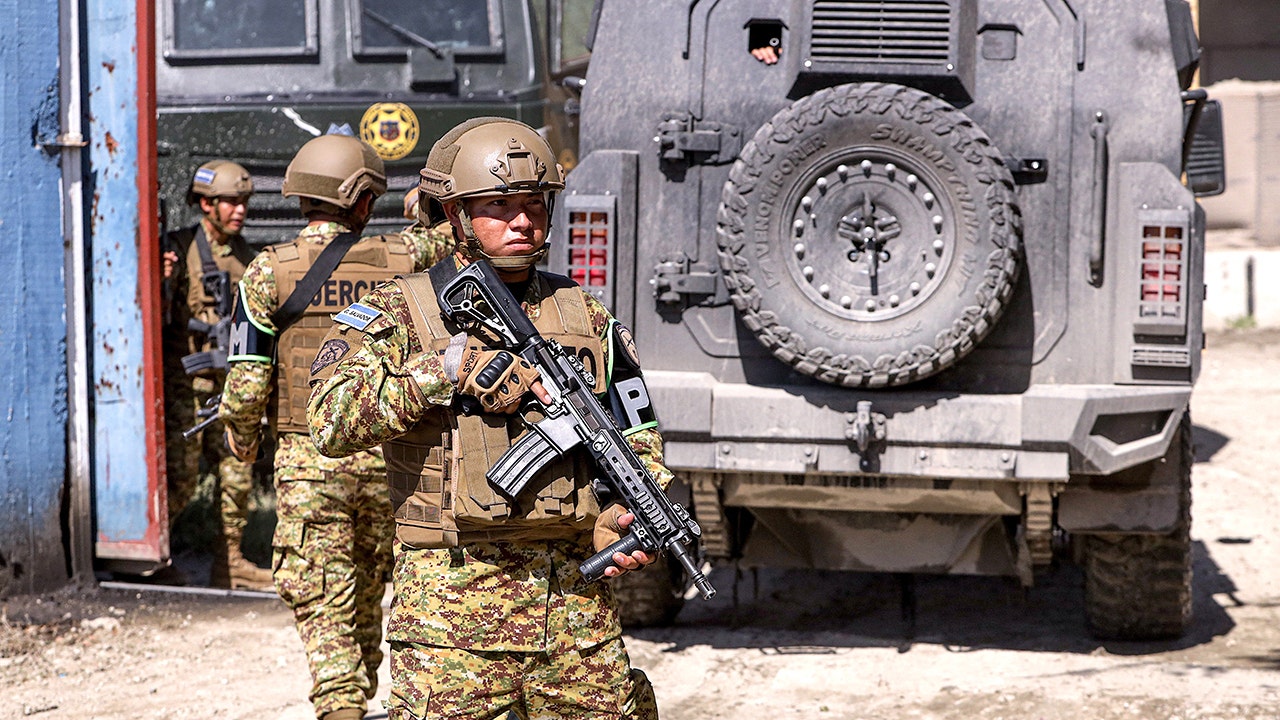
El Salvador has deployed 2,000 troops to Haiti following the abduction of four Salvadoran military aviation technicians, who disappeared after an ambush on October 18 near Port-au-Prince. The technicians were part of a United Nations-backed Gang Suppression Force (GSF) in Haiti when their armored vehicle was attacked in Croix-des-Bouquets.
Salvadoran President Nayib Bukele emphasized that the goal of the operation is to recover the missing men, asserting on X, “We have already finished with the gangs in El Salvador, and we can finish with you too,” while clarifying that the mission is not intended as an invasion or long-term occupation of Haiti.
The disappearance of the technicians has escalated into a national priority for Bukele. He warned Haitian gang leaders that El Salvador is ready to employ overwhelming force if the Salvadorans are not returned alive. The Haitian National Police reported on Tuesday that they found the charred remains of the technicians’ vehicle but no sign of the men themselves. El Salvador’s government maintains they were abducted, while the Haitian leadership characterizes them as missing.
In a message directed toward the Haitian populace, Bukele referenced the historical figure Jean-Jacques Dessalines, warning that those who betray their people still exist today. Bukele has received support from former President Donald Trump, who acknowledged discussions with Bukele about the situation in Haiti during recent remarks.
The deployment of Salvadoran troops received backing from Haiti’s transitional government. Haitian Prime Minister Didier Fils-Aimé stated, “The international force is not here to replace the state… they’re here to support us.” He affirmed that Bukele understands the Haitian struggle and stands with the people.
The operation, however, has drawn concerns from human rights advocates and gang leaders, who argue it may exacerbate civilian suffering. According to the United Nations, over 5,700 people have been reported killed or injured due to gang violence in Haiti since the start of the year. The U.N. reiterated that El Salvador’s deployment is to assist the GSF but must comply with international law.
Gang leader Wilson Joseph of the 400 Mawozo gang has claimed that the Salvadorans are deceased and accused rival gangs of orchestrating the ambush. In a letter to U.N. Secretary-General António Guterres, Joseph warned that escalating violence would primarily harm the Haitian populace.
Bukele dismissed the gang leaders’ calls for intervention from the U.N., suggesting they use civilian concerns to shield their power. As violence continues to plague Haiti, the effectiveness of Bukele’s security strategies from El Salvador remains uncertain, especially as gangs maintain significant control over much of Port-au-Prince.
As the international community watches the situation unfold, Bukele stated, “We can help you defeat them, but we are not your enemies… Haiti will be free.”
