




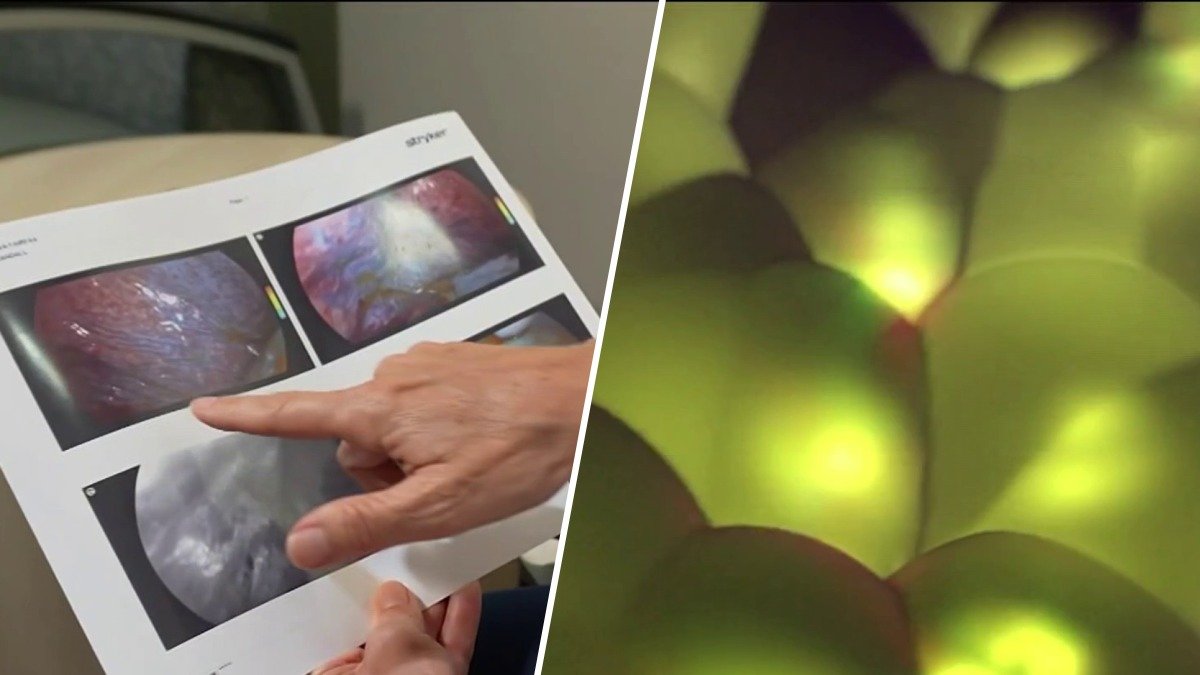
A new imaging technology is transforming the surgical landscape for ovarian cancer patients, enabling surgeons to identify cancerous cells more effectively during procedures. The technology, known as CYTALUX, causes these cells to illuminate in the operating room, offering better visibility for surgical teams.
Colleen Abbott, 60, a mother from Gaithersburg, Maryland, found herself on the cutting edge of this innovation after her diagnosis with ovarian cancer in February. Following persistent symptoms and repeated tests, she learned that the cancer had spread from her fallopian tube throughout her abdomen. This diagnosis marked a pivotal moment in her life.
Determined to fight her illness, Abbott became the first patient in the local area to undergo surgery using CYTALUX, which is administered as an infusion prior to the operation. Dr. Leslie Randall, the director of Gynecologic Oncology at Inova Schar Cancer Institute, explained that the dye helps to differentiate between healthy and cancerous tissue in real time. “Especially after chemotherapy where some of the cancer’s been treated, you can’t tell, ‘Do I need to take this out or not?’” Randall said.
The technology not only aids in identifying cancerous tissue but also highlights lymph nodes that may light up without harboring cancer, underscoring the need for surgeon discretion. “Not everything that lights up is cancer,” Randall noted.
Clinical trials have demonstrated that CYTALUX can help surgeons detect additional cancer in nearly 30% of patients, which could significantly impact treatment outcomes. “We usually only do surgery one time in the whole disease course of ovarian cancer, so this surgery is to pack a punch,” Randall stated. “I just want to remove as much as possible if I am going in there, so this just helps me see it better.”
Ovarian cancer ranks as the most lethal gynecologic cancer in the United States, claiming over 12,000 lives annually. The disease often remains undetected until it reaches an advanced stage due to vague symptoms and the absence of routine screening for women at average risk.
Following her surgery and six rounds of chemotherapy, Abbott expressed her gratitude for the intervention that aided her recovery. “I’m in remission now because they got all of it,” she said. “Can you imagine how many more women this can help? More and more women will have more time with their families.”
Inova has become the first health system in Virginia and the Mid-Atlantic to utilize CYTALUX in surgeries for ovarian cancer. While some patients reported minor side effects, such as nausea, physicians confirm that these can be effectively managed with medication, and most patients tolerate the treatment well.
