




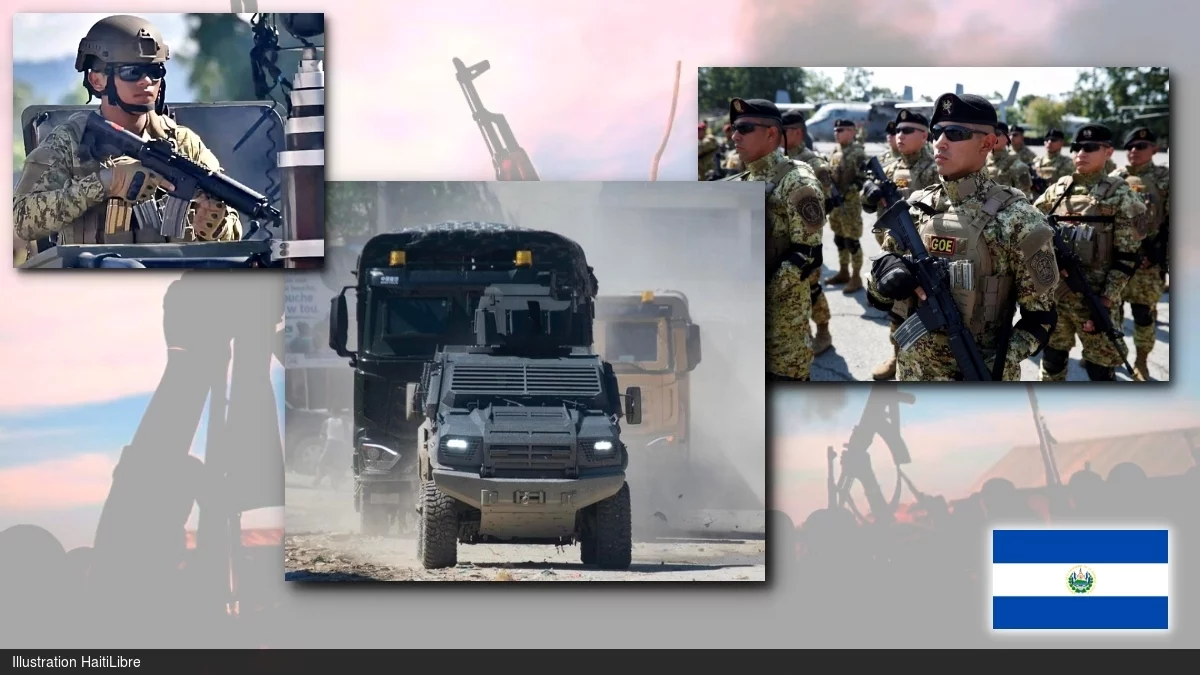
On November 6, 2026, Salvadoran Vice-President Félix Ulloa confirmed that Haitian Prime Minister Alix Didier Fils-Aimé is scheduled to visit El Salvador from November 16 to 17. The Prime Minister’s visit will coincide with an international conference on the state of democracy, where discussions will include the future of Salvadoran troops deployed in Haiti.
This military deployment came after an ambush on October 18, 2026, in Croix-des-Bouquets, near Port-au-Prince, which targeted a vehicle of the Gang Repression Force (FRG). Four Salvadoran military technicians have since been reported missing in connection with that incident.
El Salvador has sent a contingent of 2,000 troops, including special forces and equipped with armored vehicles and combat helicopters. President Nayib Bukele characterized the mission as one focused on locating the missing soldiers.
The Salvadoran military operation has attracted criticism regarding its impact on peace in the region. Some organizations, such as Médecins Sans Frontières, have voiced concerns about a potential escalation of violence.
Ulloa stated that Salvadoran troops have “gradually cleared” Croix-des-Bouquets, locating around 10 kilometers from Port-au-Prince. He noted that the Haitian government and its citizens have welcomed this military presence, emphasizing the necessity of intervening in gang-controlled areas to retrieve their personnel. However, there has been no independent verification of the number of gang members eliminated since the Salvadoran forces began their operation.
In a significant development, Ulloa reported that Wilson Joseph, known as “Lanmò San Jou,” the leader of the 400 Mawozo gang in Croix-des-Bouquets, sent a letter to the United Nations requesting a truce. This request indicates that gang leaders recognize the superior capabilities of the Salvadoran military.
Ulloa clarified that El Salvador does not aim to replace the UN-supported Gang Suppression Force, which assists the Haitian police. He noted the cost-effectiveness of El Salvador’s mission compared to international efforts, stating that the deployment is fully funded by El Salvador.
Since the deployment of Salvadoran troops, violent clashes have been reported between the military and gangs, indicating that gang members are feeling increasingly threatened. Observers suggest that the Salvadoran forces are better equipped for urban combat, further intensifying the existing tensions.
Marie Yolène Gilles, founder of the human rights organization Fondasyon Je Klere, commented on the panic among gang members, particularly following the letter sent by Wilson Joseph seeking mediation. The ongoing situation continues to evolve, with further developments expected as the Salvadoran military operation proceeds.
