




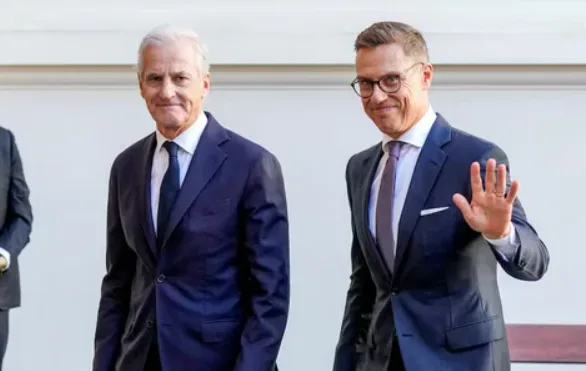
The recent dialogue between Norwegian Prime Minister Jonas Gahr Støre, Finnish President Alexander Stubb, and Russian President Vladimir Putin has sparked criticism among several European leaders. Concerns have emerged that separate discussions with Moscow could dilute Europe’s unified stance, while Ukrainian President Volodymyr Zelenskyy expressed support for the initiative.
Danish Prime Minister Mette Frederiksen expressed skepticism regarding such contacts, while Swedish Prime Minister Ulf Kristersson emphasized that peace in Ukraine should be pursued through strength rather than appeasement of Russia. An unnamed European official cautioned that independent negotiations with the Kremlin could threaten European solidarity and advocated for utilizing existing diplomatic frameworks, such as those involving Germany, France, and the United Kingdom.
Zelenskyy highlighted the importance of these talks, thanking the leaders of Norway and Finland for establishing an additional communication channel to convey Europe’s stance directly to Moscow, rather than relying exclusively on discussions facilitated by the United States. He noted that European countries have historically engaged with Russia through national security advisers and intelligence agencies.
“Here, everything is happening completely openly: prior discussions, a full briefing, and transparent objectives,” Zelenskyy said.
Additionally, Italy criticized the absence of a unified European representation in the peace dialogues, calling for the appointment of negotiators endowed with a common mandate.
As the situation develops, European leaders appear divided on the best approach to negotiations with Russia, highlighting the complexities surrounding the ongoing conflict in Ukraine.
