




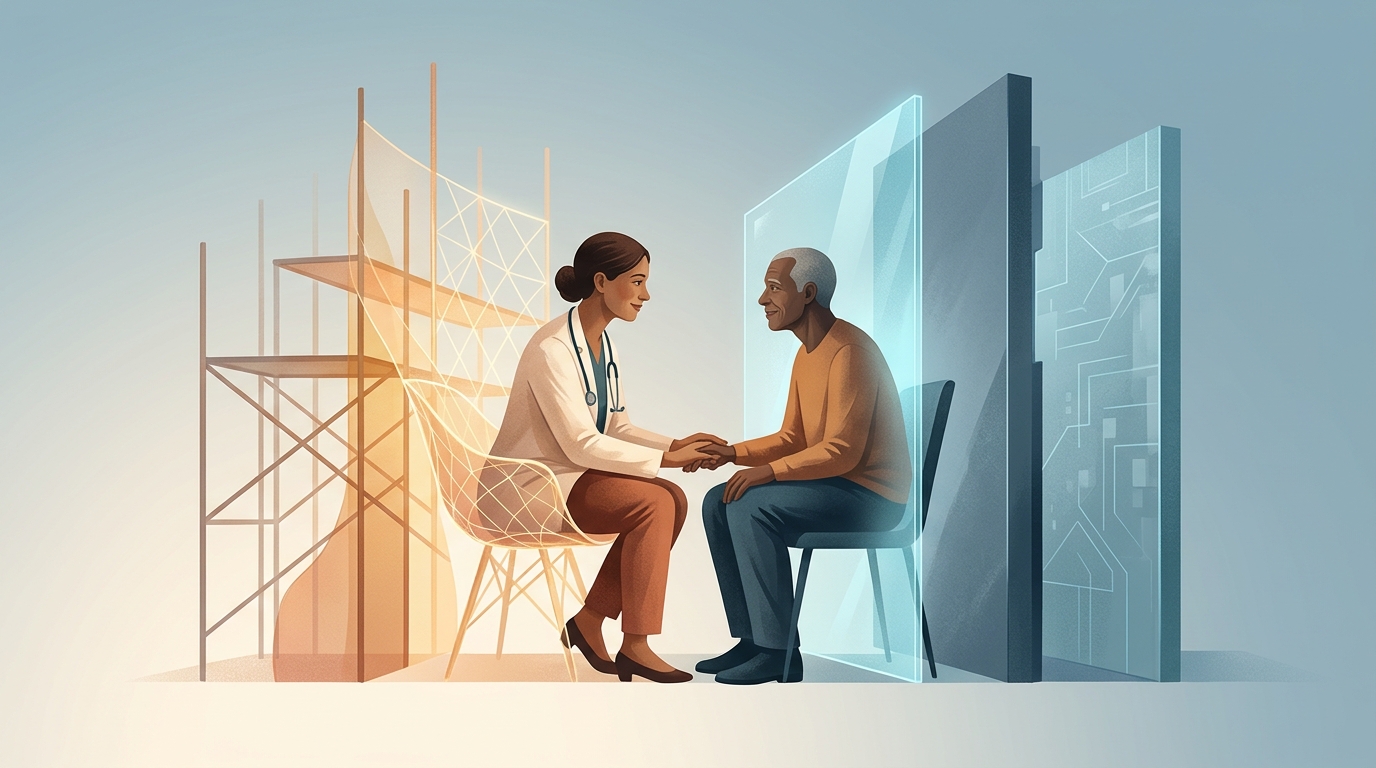
Recent observations in a new editorial highlight the complex role technology plays in person-centred care across various healthcare settings. In “Person-centered care: challenges and opportunities in a technological era,” authors Júlio Belo Fernandes from the Egas Moniz Center for Interdisciplinary Research and Brendan McCormack from the Susan Wakil School of Nursing and Midwifery assert that while technology permeates health systems—from monitoring and diagnosis to organizational structure—it does not inherently define person-centred practice.
The editorial compiles contributions from 14 studies worldwide, covering domains such as pediatric intensive care, nursing homes, and online counselling. It emphasizes that person-centred practice is based on trust and mutual understanding among individuals rather than on technological advancements. However, the authors note that the context surrounding care relationships is changing due to technological integration.
Evidence from studies in everyday healthcare settings demonstrates both the benefits and drawbacks of technology in practice. Research in three Dutch nursing homes revealed that remote diagnostics could reassure families and enhance response times. However, care professionals emphasized the importance of human interpretation; data effectiveness relies on the caregivers’ understanding of residents beyond numerical indicators.
Technological tools can bolster person-centred initiatives, such as an AI-based application assessing pain in non-verbal dementia patients, which has shown promise in simulated environments. Yet, the editorial cautions that tools should augment rather than replace professional judgment. For instance, while natural language processing can improve outpatient triage, most applications have yet to be thoroughly evaluated in real-world scenarios. The authors argue that these tools should support clinicians in decision-making rather than act independently.
The editorial also addresses disparities in needs and expectations between healthcare professionals and patients. Research indicated that nursing students prioritize medical monitoring, while older adults value emotional support and greater privacy. Bridging this gap may involve recognizing and improving the humanistic and narrative competencies of caregivers, which allow them to engage meaningfully with patients.
The authors stress the importance of maintaining relational dimensions in care, as many current studies focus primarily on measurable outcomes like accuracy or efficiency. A comprehensive understanding of technology’s impact should include how it affects dignity and genuine interactions in patient care. The research highlights that future studies should prioritize person-centred outcomes, involve patient feedback in technology design and evaluation, and assess the real-world implications of integrating technology in healthcare.
This editorial serves as a call to explore how technology might shape or detract from person-centred care, urging a critical examination of its place in health systems. The authors conclude with a pressing agenda for future work to ensure that patient relationships remain at the forefront of care amidst the evolving landscape of technological integration.
