




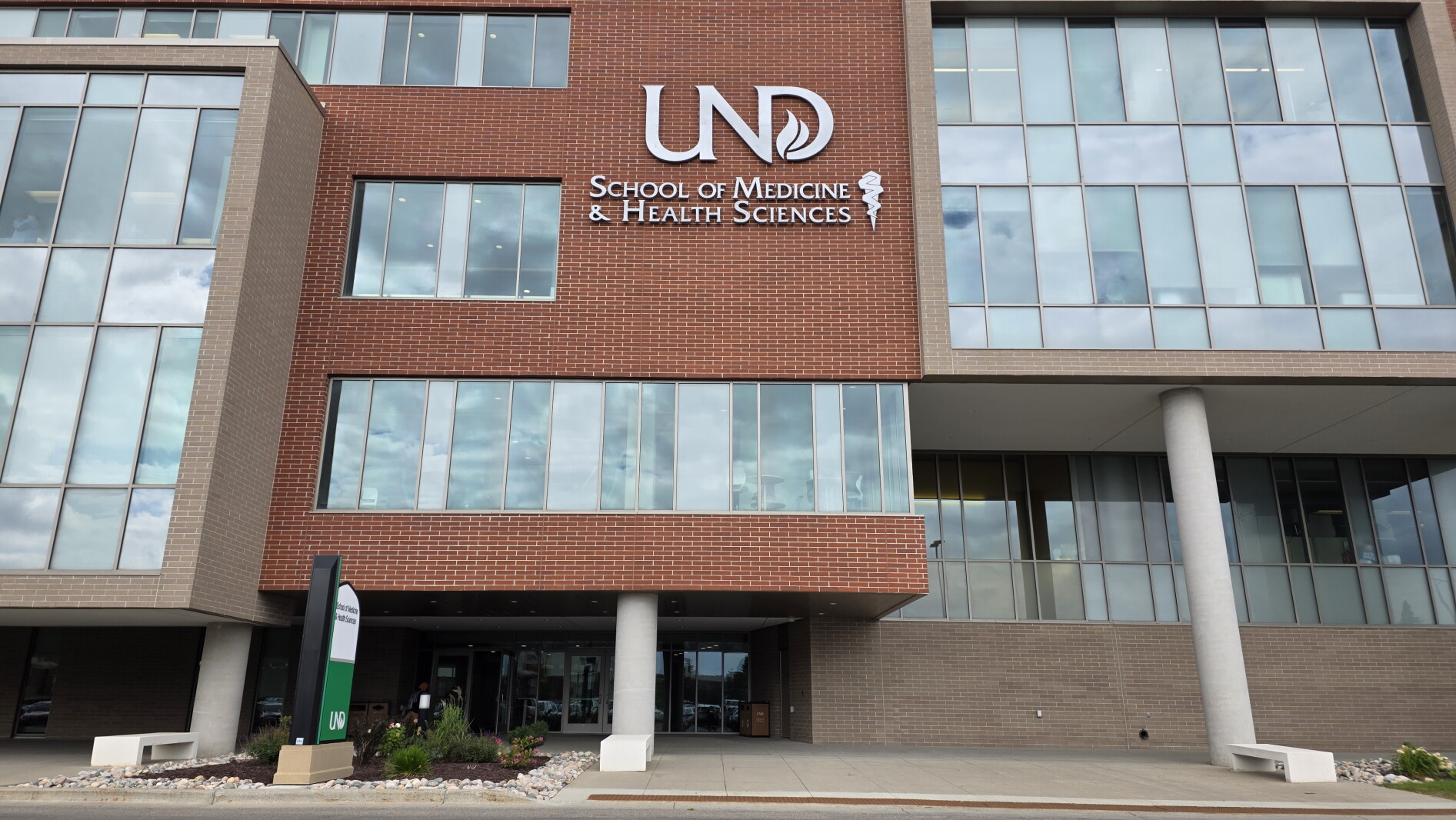
Grand Forks, ND — The University of North Dakota (UND) has introduced a non-thesis option for its Master of Science graduate program in Biomedical Sciences, expanding the options available for students pursuing advanced degrees without a traditional thesis requirement. This program aims to provide practical applications of knowledge and hands-on experiences in health sciences.
Lisa Johnson, deputy commissioner for academic and student affairs with the North Dakota University System, indicated that an array of master’s and specialist degrees within the system now offer alternatives to a thesis, emphasizing practical skills and professional competencies. “It’s quite common,” Johnson noted, highlighting that many graduate programs are adapting to focus on real-world challenges rather than solely academic research.
The non-thesis program at UND will equip students with training in anatomy, physiology, and microbiology, focusing heavily on teaching and pedagogy. According to Amanda Haage, assistant professor and director of the non-thesis program, this initiative addresses two distinct groups: those preparing for medical school and others interested in academic teaching roles.
Students in the program will gain teaching experience by serving as teaching assistants in undergraduate courses, fulfilling increased demands as enrollment rises. “This program allows some of our master’s students to become more proficient in biomedical content through teaching it,” said Barry Milavetz, Interim Chair of the Department of Biomedical Sciences. He noted that while undergraduate enrollment is growing, funding for graduate student research remains limited.
Applications for the first cohort, expected to launch in the coming summer, are now open with an initial target of about 10 students. Haage explained that the program’s capacity may be influenced by available cadaver lab space, but demand for skilled educators in anatomy remains high across both regional and national educational landscapes.
The conversation about establishing a non-thesis program at UND dates back to 2019, inspired by the need for bridge offerings for students after their undergraduate studies. The initiative aligns with the “North Dakota 85” effort to increase local participation in medical and physician assistant programs at UND, helping to fortify regional medical education.
“We see the non-thesis master’s degree as a rigorous prep option for North Dakota students,” Milavetz added, highlighting its potential to enhance students’ preparation for exams like the Medical College Admission Test (MCAT) and provide a solid life sciences foundation for pre-clinical training.
The program is designed to accommodate various career paths, from industry positions to doctoral research, allowing students to tailor their electives to fit their professional interests. Students might also gain advanced teaching qualifications as part of their studies.
Johnson emphasized that these non-thesis programs respond to workforce needs and feedback from employers, focusing on hands-on learning and practical applications relevant to various professions. “All of them provide evidence that graduates have met the rigorous academic standards,” she concluded.
